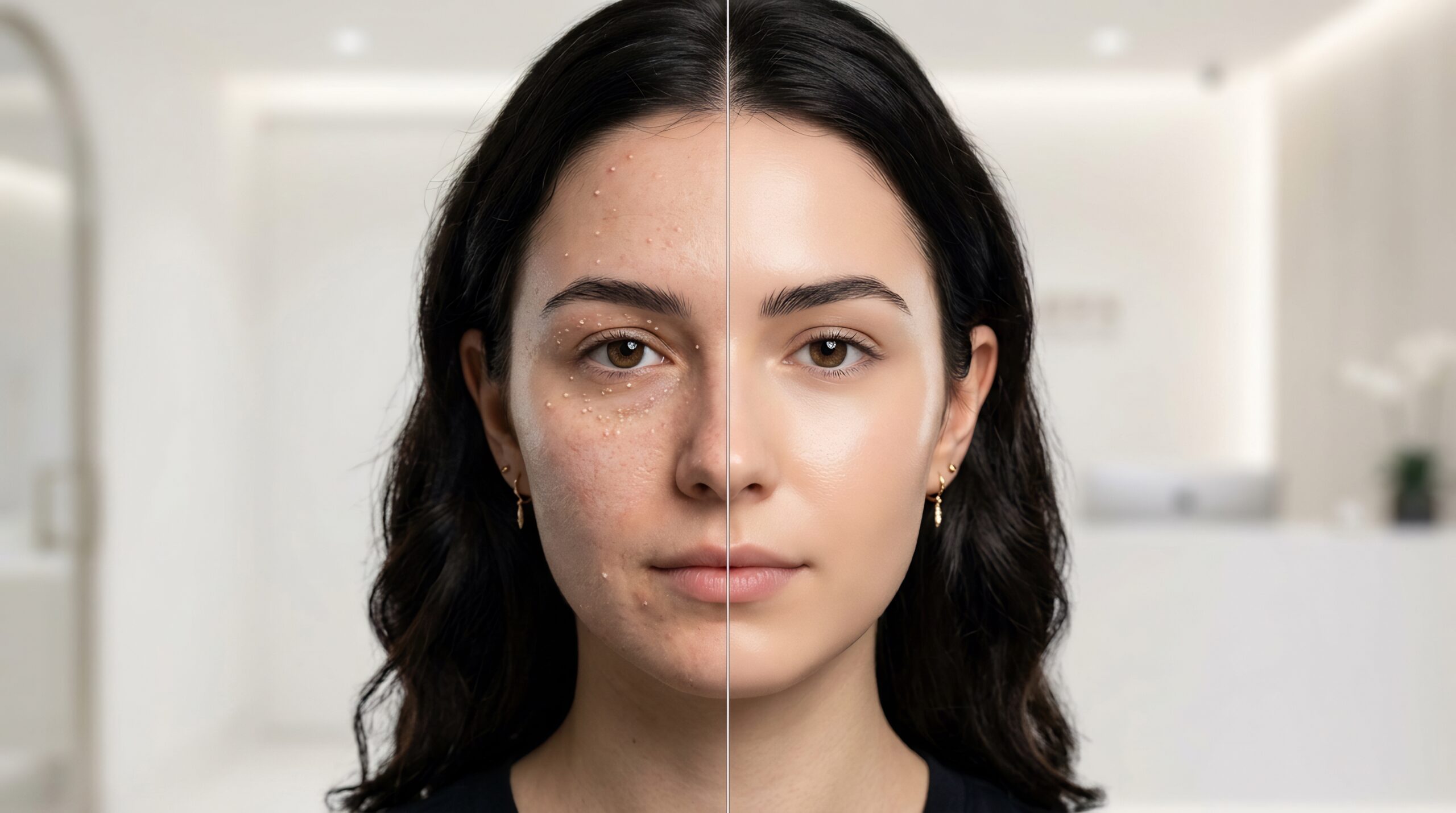
We’ve all done it. You notice a tiny white bump on your cheek or under your eye, head to the mirror, and instinctively try to squeeze it. After all, it looks like a whitehead—so it should pop, right? Not quite. Those stubborn little bumps are often Milium Cysts, and treating them like acne can do more harm than good. Instead of clearing your skin, squeezing them can lead to irritation, infection, scarring, and unnecessary damage to the surrounding tissue. Understanding what these tiny cysts actually are is the first step toward treating them safely and keeping your skin healthy.
What Are Milium Cysts?
Milium Cysts are small, firm white or yellowish bumps that form when keratin, a natural skin protein, becomes trapped just beneath the surface of the skin.
Unlike pimples, they don’t contain oil or bacteria. That’s why they don’t respond to acne treatments or pop the way a whitehead does.
They commonly appear around the eyes, cheeks, forehead, or nose, but they can develop almost anywhere on the body. Adults and children alike can experience them, and while they’re harmless, many people choose to remove them for cosmetic reasons.
Why They Should Never Be Popped At Home
Here’s the simple answer: Milium Cysts aren’t designed to be squeezed.
The trapped keratin sits inside a tiny sac beneath the skin. Pressing on it with your fingers or using sharp tools at home usually doesn’t remove the cyst. Instead, it often damages the healthy skin around it.
The risks include:
- Skin irritation
- Bleeding
- Infection
- Dark spots after healing
- Permanent scarring
The delicate skin around the eyes is especially vulnerable. Even a small injury in this area can take weeks to heal and may leave lasting marks.
If you’ve ever tried to pop one only to end up with a red, swollen bump, you’ve already seen why home extraction rarely works.
How Dermatologists Remove Milium Safely
Professional removal is surprisingly quick and much gentler on your skin.
A dermatologist carefully creates a tiny opening with a sterile instrument and removes the trapped keratin without damaging the surrounding tissue. Because the technique is precise, healing is usually fast and the risk of scarring is minimal.
For people with recurring Milium Cysts, a dermatologist may also recommend changes to skincare products or routines that could help reduce future buildup.
The goal isn’t simply removing one bump—it’s protecting the overall health and appearance of your skin.
Why Professional Skin Treatments Matter
Many skin concerns may look similar but require completely different treatments.
For example, someone seeking Cosmetic Wart Removal might assume every small bump on the skin is a wart, while another person mistakes a milium for acne. In reality, these conditions develop for different reasons and require different treatment approaches.
That’s why professional evaluation matters.
Clinics that provide Cosmetic Wart Removal first identify exactly what the skin growth is before recommending treatment. The same careful approach applies when diagnosing and treating milia. Getting the diagnosis right prevents unnecessary procedures and helps achieve better cosmetic results.
Understanding Different Dermatology Treatments
Dermatology clinics often offer treatments for a wide range of skin conditions, but not every treatment is appropriate for every concern.
For example, Superficial Radiation Therapy is a specialized treatment used in certain medical situations, such as selected non-melanoma skin cancers under a physician’s guidance. It is not a treatment for milia or routine cosmetic skin bumps.
Likewise, Cosmetic Wart Removal is designed specifically for benign warts caused by viral infections, not for Milium Cysts.
Knowing the difference helps patients make informed decisions instead of relying on internet advice or social media trends that may oversimplify skin care.
How To Prevent Milia From Returning
While it’s not always possible to prevent Milium Cysts, a few healthy habits may reduce your chances of developing them.
Start with a gentle skincare routine that removes makeup thoroughly and avoids heavy products that may contribute to clogged skin. Regular exfoliation, when appropriate for your skin type, can also encourage healthy skin cell turnover.
If you notice recurring bumps, don’t keep squeezing them. Instead, schedule an evaluation with a dermatologist who can determine whether they are milia or another skin condition.
If you’re also considering Cosmetic Wart Removal for unrelated skin concerns, it’s worth discussing all visible skin growths during the same appointment. A professional assessment can often address multiple concerns while ensuring each receives the right treatment.
Conclusion
It can be tempting to treat every small white bump like acne, but Milium Cysts are different. Because they’re filled with trapped keratin rather than oil, squeezing them at home usually causes more harm than good. Professional removal is safer, more effective, and far less likely to leave scars or irritation behind. Understanding the difference between milia, acne, and conditions treated with Cosmetic Wart Removal or specialized procedures like Superficial Radiation Therapy helps you choose the right care instead of risking unnecessary skin damage. If those tiny bumps aren’t going away on their own, getting them evaluated by a dermatologist is a smart next step and could be well worth exploring.