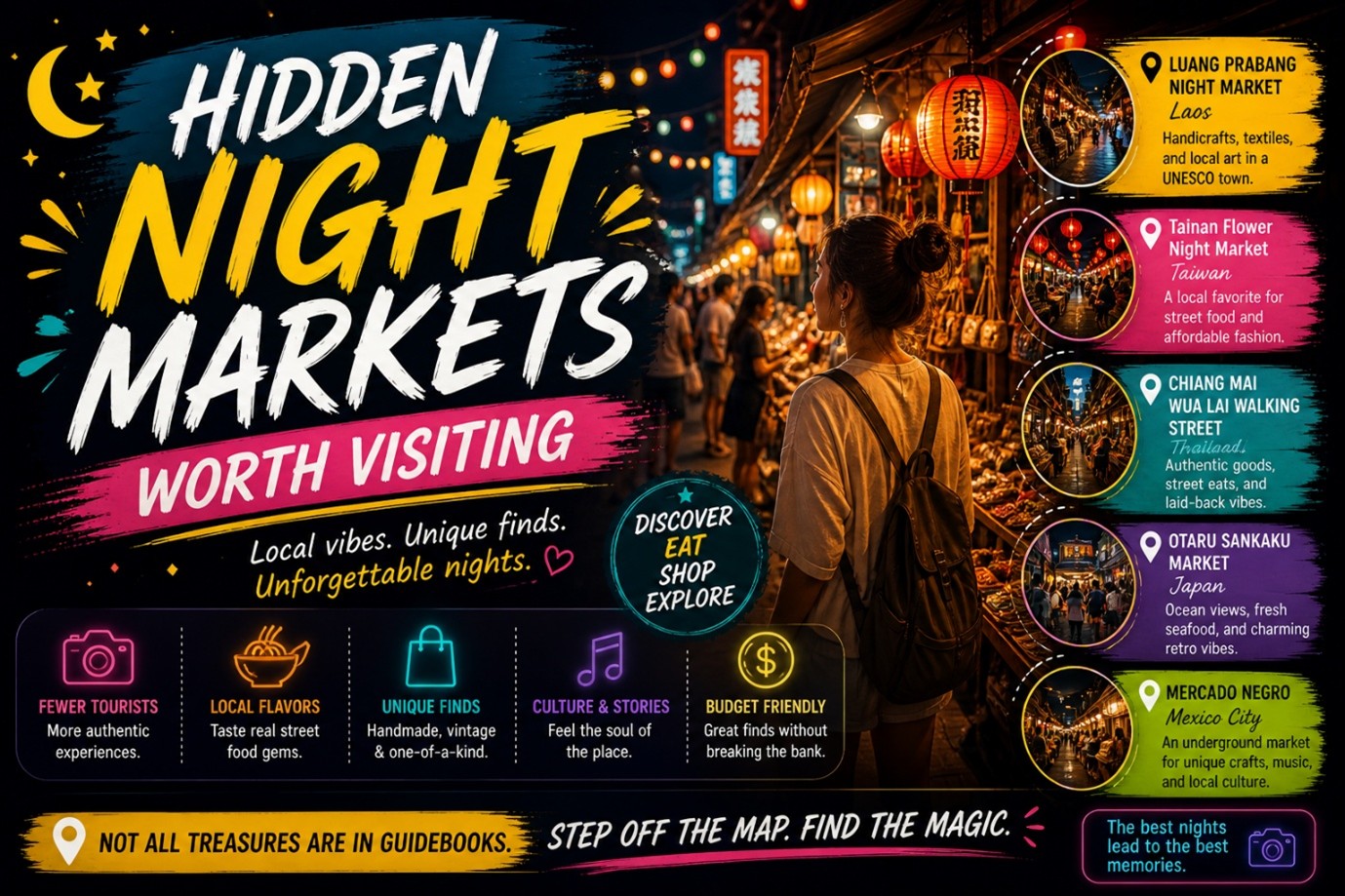
Night markets have a different kind of energy. Daytime cities can feel rushed, practical, all movement and errands. But once the sun drops and stalls begin to light up, everything softens a little. Food starts sizzling, music drifts from somewhere you can’t quite place, and people suddenly seem in less of a hurry. It’s one of my favorite versions of a city, honestly.
Most travelers know the famous night markets. Those are easy to find, usually crowded, and often worth visiting once. But the smaller hidden ones can be even better. They tend to feel more local, less polished, and more surprising. You wander in expecting a quick look and somehow leave two hours later carrying snacks you did not plan to buy.
That happens a lot.
Backstreet Markets in Bangkok
Bangkok is full of markets, but some of the most memorable ones are tucked into side streets away from the heavily promoted tourist zones. You’ll find compact lanes lined with grilled seafood, vintage clothes, handmade accessories, and dessert carts that seem to appear from nowhere.
The charm is in the unpredictability. One turn leads to a noodle stall with six plastic stools. Another leads to live music in a courtyard. Another somehow leads to someone selling old cameras and sneakers side by side.
It feels messy in the best possible way.
Neighborhood Markets in Taipei
Taipei’s major night markets get plenty of attention, but smaller neighborhood versions often feel warmer and easier to enjoy. Less shoulder-to-shoulder crowding, more space to browse, shorter food lines. A deeply underrated combination.
You’ll still get excellent street food, pepper buns, dumplings, bubble tea, fried mushrooms, and those snacks you buy because the smell alone convinced you.
Many of these smaller markets also include playful game stalls and mini attractions, a subtle form of Location-based Entertainment that makes the market feel social rather than just commercial. People stay longer when there’s something to do, not only something to buy. Smart idea, really.
Late Evening Bazaars in Marrakech
Some markets in Marrakech transform after dark. During the day, they can feel intense and busy. At night, certain corners become more atmospheric. Lantern light, tea stands, musicians, spice sellers, storytellers, and winding alleys that somehow look different after sunset.
You may get lost. Accept that possibility early.
But wandering through those lanes is part of the experience. It feels less like shopping and more like stepping into a moving scene where everyone already knows the rhythm except you.
That can be strangely fun.
Smaller Street Markets in Seoul
Seoul has well-known market areas, but some smaller local markets open later with a calmer pace. These places often focus more on food than souvenirs, which many travelers secretly prefer.
Think skewers, hot pancakes, fried chicken, rice cakes, steamed buns, and rows of stools where strangers quietly eat next to each other. There’s something comforting about that setup. No fuss, just good food and shared space.
Some newer markets are blending shopping with Location-based Entertainment through arcade corners, photo booths, themed pop-ups, and live performances. It keeps younger crowds engaged and adds personality without feeling forced.
Riverside Night Markets in Vietnam
Across cities in Vietnam, riverside evening markets often become local gathering spots rather than tourist attractions. Families walk, couples snack, children run around with too much energy, and vendors line the promenade selling everything from grilled corn to handmade crafts.
These markets feel less transactional. People are there to spend time as much as spend money. That difference changes the mood.
You may go for ten minutes and stay for two hours because it simply feels pleasant to be there. Travel plans are weak against places like that.
Why Hidden Markets Feel Better Sometimes
Big famous markets can be exciting, but they often come with crowds, inflated prices, and the odd feeling that everyone is trying to recreate the same travel photo. Smaller hidden markets usually feel more natural.
Prices can be fairer. Food often feels more focused on repeat local customers than visitors. Conversations feel less rehearsed.
You notice details more too. The auntie folding dumplings at high speed. Teenagers sharing fries. A vendor half-watching a drama series between customers. Those little scenes stay with you.
What to Do When You Visit One
Go hungry. This is practical advice disguised as common sense.
Bring cash if possible, though digital payments are growing in many places. Wear comfortable shoes because markets always look shorter than they actually are. Move slowly. If something smells amazing, trust your nose more than your itinerary.
Also, don’t try to “cover the whole market” like it’s an exam. Wander. Pause. Sit somewhere random and eat something you cannot pronounce confidently. That’s often when the good memories happen.
A Small Word on Respect
Hidden markets are usually local spaces first and attractions second. That matters.
Be polite with photos. Ask before photographing vendors or people. Clean up after yourself. Don’t bargain aggressively over tiny amounts. If something is handmade and fairly priced, it’s okay to simply pay the asking price sometimes.
Travel gets better when curiosity is paired with respect.
Final Thoughts
Hidden night markets are worth visiting because they offer something polished attractions often miss: texture. Real everyday life, a little chaotic, a little charming, sometimes smoky, usually delicious.
Whether it’s a lane in Bangkok, a riverside stretch in Vietnam, or a neighborhood market in Taipei with bits of Location-based Entertainment mixed in, these places show cities at their most alive. And if you leave carrying snacks you didn’t plan to buy, that’s probably a sign the evening went well.