Research materials often become more valuable with time. Class notes, journal articles, photographs, manuscripts, and historical records may all be needed months or even years after a project is completed. Yet many of these items are stored in ordinary folders or boxes that give little protection against dust, moisture, light, or everyday handling.
Using the right archival supplies is a simple way to preserve these materials. Archival supplies such as archival boxes, acid-free paper, folders, and polyester sleeves not only offer long-term storage but also protect your valuable documents from damage caused by handling and storage.
Let’s learn about some of the most commonly used archival supplies in detail and understand how each one keeps your valuable materials safe.
What are Archival Supplies
Not every folder, box, or sleeve is meant for long-term storage. While regular office supplies are fine for everyday use, they are not designed to preserve documents for years. That’s where archival supplies come in. These are specifically made to protect your paper, photographs, books, maps, and other materials that need to stay in good condition for a longer period.
When searching for archival products, you’ll usually come across terms like acid-free and lignin-free, which are important indicators of a product’s ability to support long-term preservation.
For example, acid-free materials prevent the paper from getting yellow and weak, whereas lignin-free materials are made without lignin, which helps reduce the risk of paper breaking down as it ages. Using these qualities of products creates safer storage conditions for research papers, historical records, photographs, and other documents you plan to store for years.
Common Types of Archival Supplies
Acid-Free Folders
Every research project generates loose papers, printed articles, and handwritten notes. Storing them in regular folders might seem convenient, but those folders aren’t meant for long-term preservation. Over time, the paper can begin to yellow or become brittle.
That’s why many students, researchers, and archivists choose acid-free folders. They keep documents together without introducing the same materials that can speed up deterioration, making them a sensible option for anything worth holding on to.
Archival Storage Boxes
Once research materials start to accumulate, keeping them together becomes a challenge. A stack of papers left on a shelf can gather dust, bend at the corners, or get damaged every time it’s moved. Even ordinary cardboard boxes aren’t always the best option, especially if the documents are meant to be kept for years.
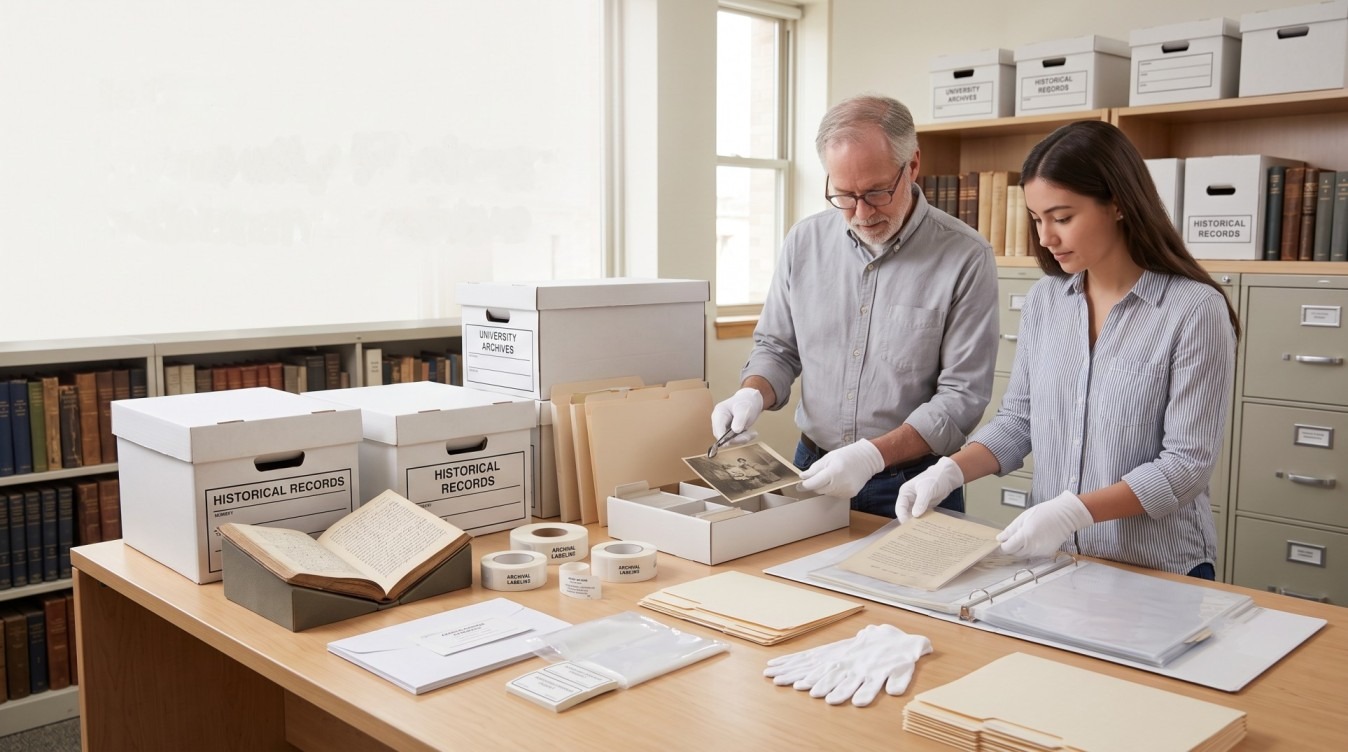
That’s one reason archival storage boxes are widely used in libraries and archives. They’re made for long-term storage, helping protect documents from light, dust, and everyday handling. Whether you’re storing field notes, photographs, newspapers, or completed research files, a well-sized archival box keeps everything in one place without putting unnecessary stress on the materials.
Protective Document Sleeve
Some documents are handled more often than others. You might pull out a certificate for verification, revisit old research notes while writing a paper, or refer to maps and photographs several times during a project. The more frequently these materials are handled, the greater the chance of creases, fingerprints, or torn edges.
Protective document sleeves offer a simple way to reduce that wear. Since the document stays inside the sleeve while being viewed, there’s less direct contact with the paper itself. They’re particularly useful for preserving photographs, certificates, newspaper clippings, and other items that are either delicate or difficult to replace.
Archival Tissue Paper
Archival tissue paper is often used when documents or collectible items need an extra layer of protection during storage. Unlike ordinary tissue paper, it’s made for preservation, making it suitable for wrapping or separating fragile materials without introducing substances that could contribute to their deterioration.
You’ll often find it placed between photographs, old letters, prints, or textiles to help reduce friction and prevent surfaces from rubbing against one another. Depending on the item being preserved, buffered or unbuffered tissue paper may be recommended, so it’s worth choosing the type that’s appropriate for the material you’re storing.
Cotton Gloves
Have you ever noticed how easily fingerprints show up on old photographs or glossy prints? Even clean hands can leave behind natural oils and moisture that gradually affect delicate materials, especially when they’re handled repeatedly.
That’s why cotton gloves are commonly used in archives, museums, and libraries when handling valuable collections. They create a barrier between your hands and the item, helping reduce the transfer of oils, dirt, and fingerprints. If you’re working with rare books, photographs, maps, or historical documents, wearing cotton gloves is a small habit that can go a long way in keeping them in good condition.
Archival Pens
Labelling folders, storage boxes, or document sleeves is part of keeping any research collection organized. It’s tempting to use whatever pen is nearby, but not all inks are intended for long-term use. Some can fade over time, while others may bleed or transfer onto the materials they’re meant to identify.
Archival pens are made with preservation in mind. Their ink is designed to remain stable, making it a reliable choice for labelling archival folders, storage boxes, and protective enclosures. When you’re working with collections that may be stored for years, using the right pen is just as important as choosing the right storage materials.
Protective Book Enclosures
Books and bound documents need a different kind of protection. A folder works well for individual sheets, but it won’t prevent the wear that books experience during storage or handling. They may be stacked carelessly, squeezed onto crowded shelves, or left in areas where dust gradually settles. Over time, these everyday practices can weaken covers, strain bindings, and even cause pages to warp. Older books are particularly vulnerable because their paper, adhesives, and bindings naturally become more fragile with age.
Use a protective book enclosure to shield books from everyday wear while they’re in storage. They help keep dust and light away from the surface and reduce unnecessary movement that can damage fragile bindings. If a book is rarely used but still needs to be preserved, storing it in a properly fitted enclosure is often a better option than leaving it unprotected on a shelf.
Common Mistakes That Can Damage Important Documents
You don’t have to mishandle a document for it to get damaged. In many cases, it’s the small, everyday habits that cause the most harm over time. If you’re hoping to preserve research papers, photographs, or historical records for years, these are a few mistakes worth avoiding.
Using Whatever Box Is Available
When it’s time to clear your desk, it’s easy to grab an empty cardboard box and put everything inside. It works for short-term storage, but not if those papers are meant to last. Ordinary cardboard wasn’t made with preservation in mind, so it’s better to move important documents into archival storage boxes when you can.
Reaching for Regular Tape
A torn page often leads to the same reaction – grab a roll of clear tape and fix it. The problem is that most household tapes don’t age well. The adhesive can dry out, leave stains behind, or become difficult to remove without damaging the paper. If a document has long-term value, it’s usually better to leave it untouched than to repair it with ordinary tape.
Keeping Documents Where Sunlight Reaches Them
Natural light makes a room feel inviting, but your documents won’t appreciate it. Papers, photographs, and printed materials can gradually fade or discolour when they’re exposed to sunlight for long periods. A cool, dry storage space away from direct light is a much safer place for anything you want to preserve.
Overfilling Folders and Storage Boxes
We’ve all tried squeezing “just a few more papers” into a folder that’s already full. It saves space in the moment, but it can leave you with bent corners, creased pages, or torn edges later. Giving documents enough room to sit flat is a simple habit that helps keep them in better condition.
Handling Fragile Documents More Than Necessary
Some documents naturally become more delicate with age. Every time they’re unfolded, passed around, or handled without care, the chances of accidental damage increase. If you need to refer to them regularly, using protective sleeves and handling them as little as possible will help them last much longer.
A Few Final Thoughts
Most people don’t think about document preservation until they come across a faded photograph or a stack of papers that’s become too fragile to handle. By then, some of the damage has already been done.
A little care while storing research materials can make a surprising difference over time. Whether it’s using an acid-free folder, choosing a better storage box, or handling delicate documents more carefully, these small habits help ensure that the information you’ve worked hard to collect is still there when you need it.