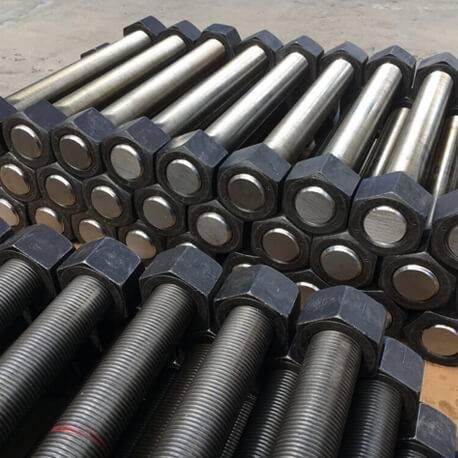
Carbon steel fasteners are among the most extensively used fastening components in industrial operations worldwide. They are widely applied across construction, automotive, oil and gas, manufacturing, power plants, heavy engineering, and large infrastructure sectors, where reliable fastening solutions are essential for safety and long-term performance. Bolts, nuts, screws, studs, washers, and threaded rods made from carbon steel remain the standard fastening solution because they deliver sufficient mechanical performance at a cost that alternatives like stainless steel cannot match at scale.
Carbon steel is an iron-carbon alloy in which the carbon content directly determines mechanical behaviour. Low-carbon steel fasteners, with carbon below 0.3%, provide good ductility and suit applications requiring formability and moderate strength. Higher carbon grades offer increased tensile strength and hardness, appropriate for load‑critical bolted joints. This grade range is what keeps carbon steel relevant across a broad spectrum of fastener applications in demanding industrial environments.
Why Carbon Steel Fasteners Are Widely Used in Industrial Applications
The sustained preference for carbon steel fasteners in industrial procurement reflects a combination of mechanical suitability, commercial availability, and cost efficiency that most other fastener materials cannot match collectively.
Tensile strength is the primary technical consideration. Bolted joints in pressure vessels, structural steel frames, and heavy industrial equipment require fasteners that maintain clamping force without deforming. Carbon steel meets this requirement consistently. Under repeated or dynamic loading, the material retains its mechanical integrity where lower-strength alternatives would not.
Cost remains a decisive factor at scale. Carbon steel is produced in high volumes from widely available raw materials. On a per-unit basis, it is considerably less expensive than stainless steel. For projects involving thousands of fasteners, that differential is significant enough to influence specification decisions directly.
Surface coatings extend the application range. Hot-dip galvanizing, zinc-nickel plating, and PTFE coatings allow carbon steel fasteners to perform in environments that would otherwise accelerate degradation. The base material provides structural capacity; the coating addresses environmental exposure.
According to An Expert’s Guide on Carbon Steel Fasteners, industries prefer these fasteners because they provide the right balance of strength, affordability, and performance for large-scale industrial projects.
Key Benefits of Carbon Steel Industrial Fasteners
High Load-Bearing Capability
Carbon steel fasteners sustain significant axial and shear loads across bolted assemblies. In flanged pipeline joints, structural steel connections, and machinery mounting, clamping force demands are substantial. Carbon steel maintains joint integrity under these conditions without deformation at the thread or bolt neck.
Strong Mechanical Properties
Tensile strength, yield strength, and hardness can be adjusted through heat treatment. Grade 8.8 and Grade 10.9 carbon steel bolts are standard where higher mechanical ratings are specified. This adjustability allows the material to serve across varied load conditions within a single project.
Easy Installation
Carbon steel fasteners are installed using standard tooling and torque procedures without specialized handling requirements. On large industrial sites with high installation volumes, this reduces labor time and minimizes the risk of procedural errors.
Long Service Life
In non-corrosive or mildly corrosive service environments, carbon steel fasteners maintain structural performance throughout the design life of the assembly. With appropriate coatings, service life extends to outdoor and moderately chemically active environments.
Compatible with Industrial Assemblies
Carbon steel fasteners conform to dimensional standards and are appropriate for most industrial flanges, structural profiles and mechanical parts. Usually specified with Carbon Steel Bolts, Hex Bolts and other Industrial Fasteners. See Fastener Grades for mechanical requirements specific to each grade.
Types of Carbon Steel Fasteners Used in Industries
Carbon Steel Bolts
The primary fastening component in structural steel connections, flanged pipe joints, and equipment mounting. Standard in construction and oil and gas where bolted joints must sustain consistent clamping loads over extended service periods.
Nuts
Hex nuts, heavy hex nuts, and coupling nuts complete bolted assemblies in petrochemical plants, power generation facilities, and civil infrastructure. Nut grade is specified in conjunction with the bolt grade for compatible mechanical performance.
Screws
Machine screws and self-tapping screws are used in manufacturing, automotive assembly, and general industrial fabrication where thinner material sections require secure fastening to heavier structural components.
Stud Bolts
The standard fastener for flanged pipe connections in oil and gas, chemical processing, and power generation. Fully threaded and used with two hex nuts to generate controlled clamping force across the flange face.
Washers
Plain and spring washers distribute load, protect joint surfaces, and maintain clamping force in assemblies subject to vibration. A standard component across most industrial bolted connections.
Threaded Rods
Used for anchoring, suspension and tie rod applications in the construction and civil engineering fields. Cut to lengths on site. Suitable for installations where the fastener lengths differ from position to position.
Why Choosing the Right Carbon Steel Fastener Manufacturer Matters
The quality of fasteners is not consistent between suppliers. Two manufacturers of the same nominal grade can have different actual tensile performance, dimensional accuracy and coating integrity. These differences have real technical implications for pressure systems, load-bearing structures, or rotating equipment.
Material traceability is a key quality indicator. Chemical composition and mechanical test certificates must be traceable to the specific heat of steel used. In oil and gas and power generation procurement, this documentation is frequently a contractual requirement. A competent Carbon Steel Fastener Manufacturer conducts tensile testing, hardness testing, and dimensional inspection as standard practice, with bulk supply capacity and delivery reliability to match project schedules.
Seamac Piping Solutions Inc. is a manufacturer, supplier and exporter of industrial fasteners and piping components. We cater to the buyers in the USA, UK, UAE and other international markets with consistent product quality and complete material documentation.
Factors to Consider Before Selecting Carbon Steel Fasteners
Grade selection is the starting point. The mechanical rating must correspond to the load requirements of the joint. Specifying below the application demand is a preventable cause of joint failure. Environmental exposure determines the coating specification. Coastal, outdoor, or chemically active conditions each require a specifically selected surface treatment.
The thread form must be compatible with the mating components. Metric and unified thread forms are not interchangeable. Load character, whether static or fatigue-driven, influences grade selection and fastener quantity. Size and dimensions should be confirmed against assembly drawings before procurement is initiated.
Conclusion
Carbon steel fasteners remain the fastening solution of choice in industrial applications since they provide adequate mechanical performance for most bolted joint requirements at a cost that is practical for large-scale procurement. Their grade range, coating options and dimensional standardization keep them relevant in construction, oil and gas, power generation and heavy engineering.
Selecting a qualified carbon steel fastener manufacturer directly affects the safety and service life of fastened assemblies. Material traceability, certified testing, and supply reliability distinguish sound procurement from risk. Seamac Piping Solutions Inc. supplies carbon steel fasteners to international markets with the documentation and quality standards that industrial project specifications require.