Uzbekistan is not subtle about food. Meals arrive heavy. Bread never stops. Tea appears before you ask. And if you think you’ll just “try a few dishes,” you’re already underestimating what’s coming.
Food here is practical, filling, and tied to place. You don’t eat the same way in every city, and pretending otherwise is where trips often go wrong. Whether you’re moving independently along the Silk Road or following a structured route like Uzbekistan Silk Road tour packages, eating well in Uzbekistan means paying attention to timing, region, and tradition—without turning every meal into a performance.
This guide is built from real tables, not theory. What locals eat? What visitors misunderstand? And what’s worth slowing down for.
Plov (Osh)
You can’t avoid plov. Don’t try.
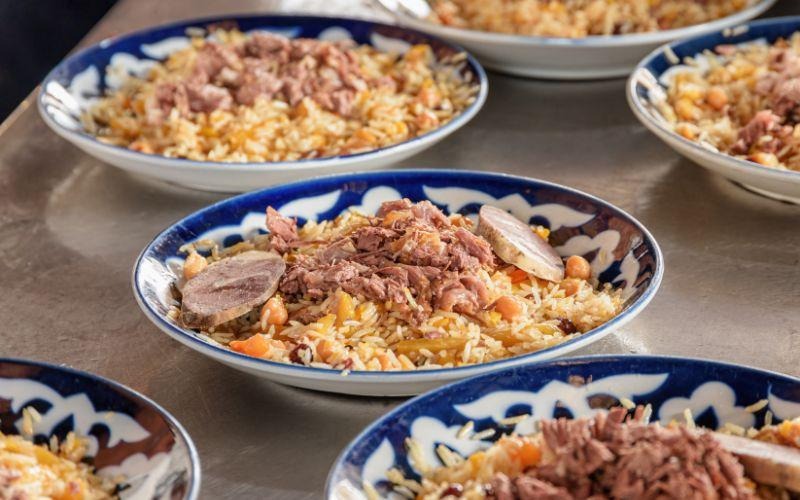
Plov is rice cooked with meat (usually lamb or beef), carrots, onions, and oil, sometimes with chickpeas, raisins, or quail eggs depending on the region. Every city claims its version is the best. They’re all right, in their own way.
The key thing most travelers miss: plov is a lunch dish. Not dinner. In many places, it’s cooked once a day and sold until it’s gone—often by early afternoon. Ordering plov at night usually means reheated leftovers. That’s not the experience you want.
In Tashkent, plov is rich and generous. In Samarkand, it’s layered and aromatic. Ask when it was made. Locals do.
Eat it with your hands if others are. It’s normal.
Non (Uzbek Bread)
Bread isn’t a side here. It’s a responsibility.
Non is round, dense, and stamped with patterns before baking in a tandoor oven. Every region bakes it slightly differently. You’ll see people carry it home like something fragile.
Two rules:
- Never place bread upside down.
- Never throw it away casually.
You don’t need to understand why. Just follow the rhythm.
Most travelers overlook how good the bread is because it’s always there. Pay attention. Tear a piece before the meal really starts. That’s the moment.
Lagman
Lagman is where Uzbek food stretches beyond borders.
It’s a noodle dish—hand-pulled noodles, meat, vegetables, and broth or sauce depending on the version. Uighur influence shows strongly here.
There are two main styles:
- Soup lagman: comforting, slurpable, great when it’s cold.
- Fried lagman: heavier, oilier, more intense.
Order lagman when you’re tired of rice. It’s a reset dish.
If the noodles look uniform and machine-made, lower expectations. Good lagman noodles are uneven and slightly wild.
Manti
Big dumplings. Serious ones.
Manti are steamed parcels filled with minced meat and onions. They’re larger than you expect—usually four to six per serving—and incredibly filling.
Eat them slowly. They’re hot inside. This is where impatience gets punished.
Most people eat manti too late in the day and then wonder why dinner feels overwhelming. Lunch again wins.
Shashlik
Grilled meat on skewers. Simple. Direct.
Shashlik comes in many forms: lamb, beef, chicken, liver. Fatty cuts are common, and that’s intentional. Lean shashlik dries out quickly.
Eat it with raw onions and bread. Maybe a tomato salad. Nothing more is needed.
You’ll find shashlik everywhere in the evening. Smoke is a good sign. Empty grills are not.
Samsa
Samsa are baked pastries filled with meat, potatoes, pumpkin, or onions. They’re cooked in tandoor ovens and eaten as snacks or light meals.
Meat samsa are the classic, but pumpkin samsa deserve attention—especially in autumn. Slightly sweet. Comforting.
Eat samsa hot. Cold samsa are disappointing. If you’re buying them to-go, don’t wait too long.
Most people miss samsa because they’re focused on sit-down meals. Street food matters here.
Shurpa
Shurpa is a clear meat soup with large chunks of vegetables. Lamb is common. Broth is clean but deeply flavored.
This is not an appetizer soup. It’s a meal.
Order shurpa when you want something restorative. Travel fatigue. Long bus rides. Too much plov the day before.
If the broth tastes thin, the kitchen rushed it. Good shurpa takes time.
Dimlama
Dimlama is slow-cooked comfort food: layers of meat, potatoes, carrots, cabbage, sometimes tomatoes, all simmered together.
It’s rustic and filling, often cooked for families rather than restaurants. When you find it on a menu, ask if it’s made fresh that day.
This dish doesn’t photograph well. That’s fine. It tastes better than it looks.
Salads: Simple but Necessary
Uzbek salads aren’t elaborate, but they’re important.
- Achichuk: tomatoes, onions, chili, salt. Sharp and refreshing.
- Cucumber and herb salads that cut through heavy food.
These aren’t optional. They balance the meal. Skip them and everything feels heavier.
Tea, Always Tea
Green tea is standard. It arrives before food and keeps coming.
Don’t rush it. Tea marks pauses—before eating, between dishes, after the table clears.
Coffee exists, mostly in bigger cities, but tea is the language of hospitality.
Sweets and Desserts
Desserts are not the focus in Uzbekistan.
You’ll see:
- Halva
- Dried fruits and nuts
- Occasionally pastries or sweets with tea
Most travelers don’t miss much by skipping dessert. Save room for more bread instead.
Where Travelers Go Wrong
They eat too late. Kitchens wind down earlier than expected.
They over-order. Portions are large, and hosts will add food anyway.
They avoid local places because menus aren’t translated. Some of the best meals come from pointing and trusting.
And they expect variety at every meal. Uzbek food repeats itself. That’s part of the culture.
Final Thoughts
Uzbekistan feeds you with intent. Meals are structured. Dishes have a time and place. When you follow that rhythm—plov at lunch, shashlik at night, tea always—you eat well without trying too hard.
If you’re traveling independently or following routes like Uzbekistan Silk Road tour packages, let food slow you down. Ask what’s cooking today. Eat when locals eat. Don’t chase everything at once.
You’ll leave full, slightly overwhelmed, and with a better understanding of the country than any guidebook explanation could give.
FAQs
1. Is Uzbek food very spicy?
Generally no. Flavors are rich but mild. Chili appears occasionally, usually optional.
2. Is it easy to eat vegetarian in Uzbekistan?
Challenging, but possible. Bread, salads, pumpkin samsa, and some soups help.
3. Is street food safe to eat?
Usually yes, especially samsa and shashlik from busy stalls with high turnover.
4. What’s the best time of day to eat plov?
Late morning to early afternoon. After that, quality drops.
5. Do I need to use my hands to eat?
Not required, but acceptable for bread and plov in informal settings.
6. Is English spoken in restaurants?
Limited outside major tourist areas. Pointing and basic phrases work well.
7. How expensive is food in Uzbekistan?
Very affordable by international standards, especially local dishes and bakeries.