The selection of the appropriate base material defines the performance of furniture in the long run. Most homeowners make comparisons without having a clear understanding of structural differences. Materials differ greatly in terms of strength, moisture response, and long-term durability. In interior investment, the aim is stability and finish quality. Here is where Plywood sheets usually come in the picture. Knowledge of the difference between quality plywood, MDF, and particle board assists buyers in making wise choices.
Knowledge of Structural Composition:
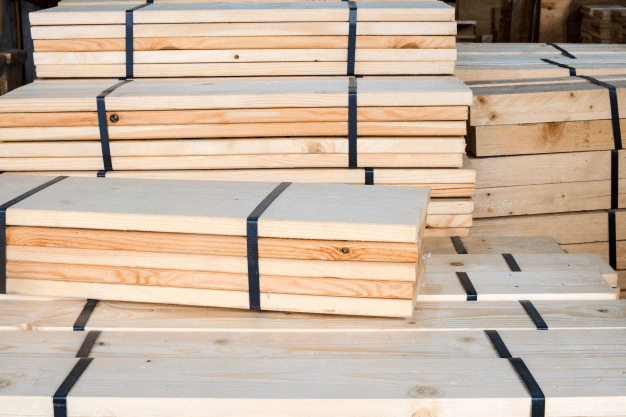
Each type of board starts with a different production process. MDF is produced by compressing fine wood fibres under heat and resin. Particle board involves the use of wood chips that are bonded using adhesives. Conversely, Plywood sheets are made by cross-layering thin veneers to enhance strength. This stratified construction enhances load-bearing. Consequently, quality plywood is more stable under stress than other engineered boards.
The cross-grain construction spreads the weight uniformly over the panel. MDF and particle board do not have this internal reinforcement. Thus, they can be bent or sag under heavy loads. Wardrobes and kitchen cabinets are particularly sensitive to structural integrity. Plywood sheets are more reliable in such applications. This stability over time helps in the value of quality plywood in the demanding environment.
Strength and Load-Bearing Performance:
Furniture should be able to support weight without bending or breaking. Internal strength is needed in bookshelves, beds, and overhead cabinets. MDF offers a smooth surface and is not effective in resisting bending. Particle board works well with lighter furniture but fails when used under constant load.
Due to the layered bonding, Plywood sheets do not split and crack. The alternating grain structure enhances impact and pressure resistance. This renders quality plywood to be used in heavy furniture. Overall material value is determined by performance under weight in long term usage. Plywood sheets are more mechanically stable than others when durability is a concern.
Screw holding capacity is also influenced by strength. After repeated use, MDF and particle board can loosen around joints. Comparatively, quality plywood retains grip around fasteners. This minimises the chances of structural failure. In the case of high usage furniture, this difference is felt with time.
Moisture Resistance and Environmental Response:
Interior materials are not affected by humidity in the same way. MDF is more prone to absorbing moisture, and this can lead to swelling. The same happens with particle board when it is subjected to wet conditions. This vulnerability is a concern in kitchens and bathrooms.
The plywood sheets have a layered structure that is more resistant to moisture penetration. Although nothing is entirely resistant to water, quality plywood is more resistant to moderate humidity. This is a benefit that is significant in Indian climatic conditions, where seasonal change affects interiors.
Surface bubbles and swelling decrease the life of furniture. As moisture resistance increases, maintenance requirements are reduced. Plywood sheets are more dimensionally stable for homeowners who want reliable solutions. This supports the long term worth of investing in quality plywood in moisture-exposed areas.
Surface Finish and Workability:
Aesthetic finish is important as well as internal strength. MDF offers a smooth surface that can be painted. Particle board is used to support laminates, but it must be handled with care. Nevertheless, the quality of the surface should correspond to the structural stability.
Plywood sheets can receive veneers, laminates and finishes without losing core strength. Their stratified structure does not allow the edges to crumble during cutting or drilling. This renders quality plywood simpler to fabricate. Carpenters tend to use materials that are both strong and flexible.
Workability determines the speed of installation and end precision. MDF can be cut at the edges when not handled. Particle board can splinter when pressured. Plywood sheets, on the contrary, retain structural integrity during shaping. In the case of customised furniture, quality plywood guarantees compatibility of finishes and reliability of fabrication.
Life Span and Economy:
Material choice is often affected by initial cost. MDF and particle board usually look cheaper. But the actual value is determined by long-term durability. When materials are degraded too soon, replacement and repairs add to the total cost.
Due to structural resilience, Plywood sheets tend to last longer than other boards. Their ability to resist cracking and moisture damage increases the life of the furniture. Quality plywood is more cost-effective over a number of years, even though it requires a greater initial investment.
Furniture constructed with stable materials is aligned and strong. Doors are well-fitted. Shelves remain level. These are what make life convenient. Plywood sheets have quantifiable benefits over MDF and particle board when comparing their lifecycle performance. The long-term returns are enhanced by the uniformity of quality plywood.
Selection based on Application:
Every material has its purposes. MDF can be used in decorative panels or low-load items. Temporary or cost-conscious furniture can be supported by particle board. Nevertheless, high-stress applications demand a reliable structure.
Plywood sheets provide better performance in the case of kitchens, wardrobes, and structural furniture. Their balanced characteristics are in line with practical requirements. Quality plywood is usually used by homeowners who are concerned with durability in making important installations.
The choice of material must be in line with the intensity of use. Stability is necessary when furniture is subjected to daily handling. Plywood sheets are dependable in such situations. This renders quality plywood a choice for durable interiors.
Conclusion:
Comparing plywood, MDF, and particle board reveals clear structural differences. While MDF and particle board offer economical options, durability and strength remain critical factors. Plywood sheets stand out because of their layered construction, moisture resistance, and long-term reliability. For homeowners seeking dependable interiors, quality plywood offers measurable performance advantages.
When investing in furniture that must endure everyday use, the right foundation matters. CenturyPly continues to provide dependable quality plywood solutions designed for strength, stability, and long-lasting performance.