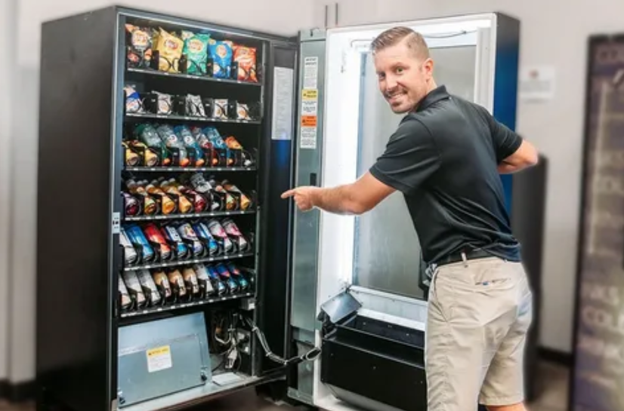
Running a vending machine business looks straightforward from the outside. Stock the machines, collect the money, repeat. Simple enough in theory.
The reality for anyone actually doing it is quite different. When you’re managing dozens or hundreds of machines spread across multiple locations, keeping track of what’s in each one, what’s selling, what’s sitting untouched, and who needs to drive where and when becomes a genuine operational challenge. Do it without the right tools, and you’re constantly reacting to problems instead of getting ahead of them.
A good inventory management dashboard changes that. It gives operators a real view of what’s happening across their entire operation from one place, without needing to physically check every machine or piece together information from spreadsheets and phone calls.
The question is what actually separates a useful dashboard from one that just looks impressive in a demo.
You need to know what’s in each machine right now
This sounds obvious, but it’s the foundation everything else builds on. Real time inventory visibility means knowing exactly what’s in each machine at any given moment, not what was in it yesterday or what the restock schedule says should be in it.
When a product is running low, the dashboard should flag it immediately. Not after it runs out. Not on the next scheduled check. Right when it crosses the threshold where you need to act.
Operators who have this kind of visibility can respond quickly enough to actually prevent stockouts rather than just discovering them after the fact. That difference matters a lot when a bestselling product has been empty for two days, and you had no idea.
The interface has to be genuinely easy to use
There’s a version of this that a lot of software gets wrong. They pack in loads of data and charts and metrics, and the result is a screen that takes ten minutes to interpret every time you open it.
The best dashboards are the opposite of that. You open it and within a few seconds you know which machines need attention, what’s selling, what’s not, and whether anything is broken. The information is organised in a way that makes sense rather than requiring you to dig through multiple screens to answer a basic question.
A dashboard that slows operators down is worse than useless. The whole point is to make decisions faster and with better information, not to create a new administrative task.
Alerts that actually tell you something useful
Automated low stock alerts are one of those features that seem basic until you don’t have them. Nobody running a vending operation wants to find out that a top selling item has been out of stock for three days because nobody happened to check that particular machine.
Good alert systems notify you when stock drops to a predefined level and let you configure those thresholds based on how quickly different products move. The more sophisticated versions prioritise alerts by sales velocity, so you’re not treating a slow moving product the same as one that empties in two days.
The goal is to shift from reactive restocking to proactive restocking. It’s a significant operational improvement, and it comes almost entirely from having the alert logic set up correctly.
It should grow with the business
A dashboard that works fine for ten machines can become a mess when you’re running two hundred. Some systems handle scale well and some really don’t.
Scalability matters because vending businesses grow and the software should grow with them without becoming slow, disorganised, or difficult to manage. Vending machine inventory management software development is often where businesses end up when they’ve outgrown generic solutions and need something built around the actual size and complexity of their operation, with the flexibility to keep evolving as the business does.
Understanding which products actually perform
Not everything in a vending machine sells at the same rate. Some products fly out. Others barely move for weeks. Without visibility into this, operators end up carrying products that aren’t earning their space and potentially missing out on stocking things that would actually sell well.
A good dashboard shows you product performance across all your locations, which items generate the most revenue, which ones are consistently underperforming, and how those patterns shift over time or across different types of locations. That information is what lets you make smart decisions about what to stock rather than just guessing or going with what’s always been in there.
Making restocking routes less wasteful
Knowing what needs restocking is one thing. Getting the right products to the right machines efficiently is another problem entirely.
A strong dashboard helps here by telling you which machines actually need a visit and when, rather than sending drivers on fixed routes regardless of whether the machines genuinely need attention. When you can prioritise restocking runs based on real inventory data, you cut down on unnecessary trips, reduce fuel costs, and make better use of your team’s time.
For anyone running a large operation, this isn’t a minor efficiency gain. Route optimisation compounds significantly across hundreds of machines and dozens of weekly runs.
Knowing when machines have problems, not just when they’re empty
A machine can be fully stocked and still not make sales if something is wrong with it. Payment terminal down. Connectivity issue. Hardware malfunction. From an inventory dashboard perspective, everything looks fine, but revenue has stopped.
The best dashboards fold machine health monitoring into the same view as inventory. You can see whether each machine is online, whether the payment system is functioning, whether there are any hardware alerts, all from the same platform you’re using to check stock levels. That complete picture is what lets operators actually stay on top of their network rather than being surprised by problems they didn’t know existed.
It needs to work on a phone
Vending operators aren’t sitting at a desk all day. They’re out visiting locations, meeting suppliers, checking in with drivers, handling whatever comes up in the field. A dashboard that only works properly on a desktop computer doesn’t fit how the job actually gets done.
Mobile accessibility is genuinely important here, not as a nice to have feature but as a basic requirement. Operators should be able to check inventory levels, respond to alerts, and make decisions from their phone without the experience being significantly worse than the desktop version.
Making data visual without making it complicated
Raw numbers in a table are useful but they make it harder to spot patterns quickly. Good data visualisation, charts that show trends over time, colour coded indicators for stock levels, visual comparisons between locations, helps operators recognise what’s happening at a glance rather than having to analyse numbers manually.
The point isn’t to make the dashboard look impressive. It’s to help people identify something worth acting on as fast as possible. When you can see at a glance that one location consistently outsells others or that a particular product is in decline across the whole network, you can do something about it.
Putting it together
A genuinely good vending inventory management dashboard is less about having every possible feature and more about having the right ones working together properly. Real time visibility, sensible alerts, clear product performance data, machine health monitoring, route planning support, and an interface that doesn’t require a training course to navigate.
When those things are in place, operators spend less time chasing information and more time making decisions based on it. For a business where margins depend on keeping machines stocked and running across a lot of locations, that’s not a small thing. It’s pretty much the difference between running the operation and being run by it.