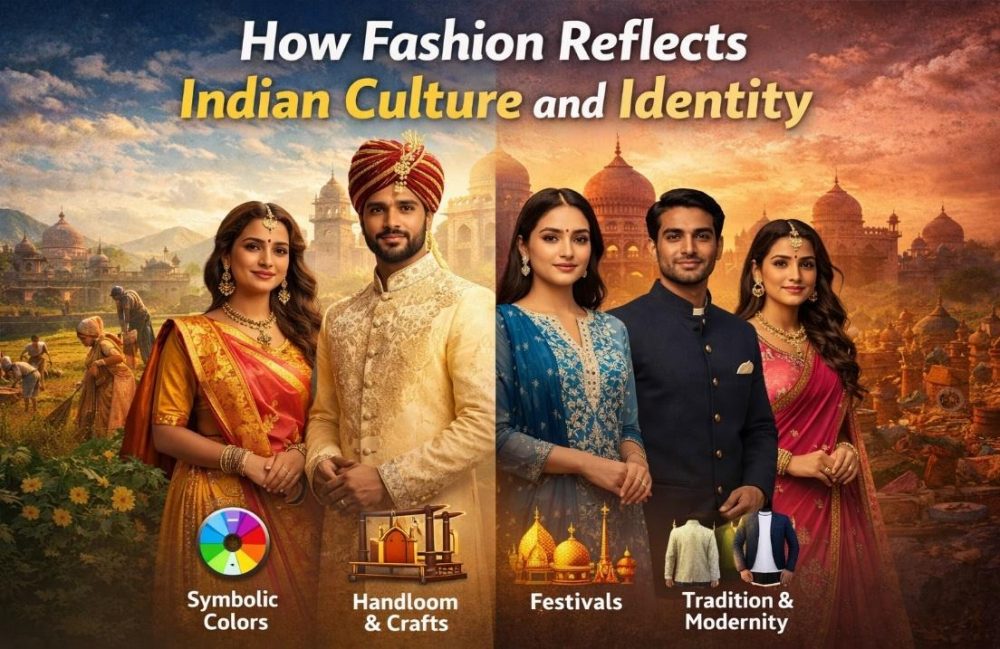
India is a land full of with different languages, faiths, and customs. One of the strongest expressions it has diversity is in fashion. Indian fashion is about more than just clothing; it is an expression of histories, cultures religions and identities. Moreover, from a lived in community robe to dazzling holiday dresses fashion reflects not. Only our innermost feelings but also where and what kind of place you are.
Fashion as a Mirror of Indian Culture
Indian fashion has always been closely related to culture. What people wear is often based on where they live, weather conditions, customs and life-style.
For example:
- In North India, people traditionally wear salwar suits, lehengas, and sherwanis
- In South India, sarees like Kanjeevaram and Nundu-veshti are common
- In Rajasthan and Gujarat, bright colours and mirror work reflect the desert way of life
Every outfit tells a story of its own, and explains how people adapt their clothing to suit their environment and customs.
Traditional Clothing and Identity
Traditional clothes are a very important part in forming the Indian national spirit. For generations people have worn clothes like sarees, kurtas dhotis and sherwanis. They are a link between the new generation of Indians and the forefathers who lived in this land before it was India.
For reflection:
- Sarees are the personification of Grace, Poise & Tradition.
- Kurta Pyjamas stand for simplicity and ease of wear
Sherwanis represent gift-giving parties and power comes from the endowments in exchange for a bride
Even today, at weddings, festivals or religious parades excepting peculiar climate MOS fashion, many people wear national dress of some kind because it gives them a feeling of identity and pride.
Colors and Their Cultural Meaning
In Indian fashion, color holds a high place. Every color has its own meaning and emotional coloration.
For instance,
- Red symbolizes love, marriage, and prosperity
- White stands for peace, purity, and spirituality
- Yellow is connected with happiness and religious rites
- Green embodies growth, life, and nature
They do not represent merely a selection of coincidental colors. They derive from deeply ingrained beliefs, feelings and cultural traditions. That have been transmitted from one generation to the next.
Handloom, Crafts, and Local Identity
Every Indian fashion designer has such links to the province where he was born or grown up.
Every region has its only style of weaving, embroidery and fabric.
Some examples:
- Uttar Pradesh’s Banarasi silk
- Bandhani from Gujarat and Rajasthan
- Lucknow’s Chikankari embroidered ensembles
- Pochampally from Telangana,
Using these materials does more than just make a fashion statement; it also encourages local artisans and helps preserve ancient crafts.
Like the ancient tools which gradually evolved into modern machines such as (Eicher tractor) that today serve India too, Indian fashion grows without losing its traditional character.
Festivals and Fashion
Festivals shape Indian fashion in an important way. Each festival has its own dress styles.
For instance:
- Diwali wears its bright colors and ethnic style clothes.
- Eid chooses long kurtas or fancy sherwanis to celebrate
- Pongal & Onam feature traditional South Indian garments
Meanwhile, Navratri addresses itself in vivid costumes conveying vibrant excitement
Fashion at its best during festivals is not tinged with luxury and sophistication, but rather reflects the joyful, hopeful nature of a gathering. It is at once a channel for people to visually live out their cultural prosperity.
Modern Fashion with Traditional Roots
Fashion in India is a melting pot of past and present, with designers mixing traditional elements in their modern style. It makes for beauty that is truly original.
Some fashionable things to wear in the subcontinent include:
- The Indo-west
- Ethnic fabrics in classic
- Jackets all done up with Low rise jeans or slacks area
This blend is a way for young people to honor their roots while being modern.
Fashion as Personal Expression
Fashion also can reveal your personal identity.
It is often said that the way someone dresses will tell you where they’re from, their background and beliefs. Many people make judgments about lifestyles based on what clothes someone else wears.
People to express theirs :
- Their cultural pride
- Their social values
- That every person is different
Even the simplest things, such as put on handloom clothes or slipping traditional jewelry. Over our heads shows respect for tradition and heritage.
Why Indian Fashion Matters Today
In the globalized world of today, Indian fashion catches your eye with its connotations, and depth. It is not pure form but goes way beyond fashion into realms like storytelling, emotion and history itself.
- India’s style statement
- Preserves cultural roots
- Unites the community
- Spans the bridge between past, present, and future
It keeps truth of history in mind while at the same time stepping into a future that is both new and different.
Final Thoughts
In India fashion is not just about dressing well or looking good but it also reflects national patterns and identity. Indian fashion from classical costume to contemporary fusion adds history, principles and diversity into garments. The culture stays alive in cloth, colour and design.
With the changing times, Indian fashion continues and develops; yet its spirit never truly changes. It serves to tell people who they are, where their ancestors came from-and so remains a genuine physical manifestation of Indian identity.