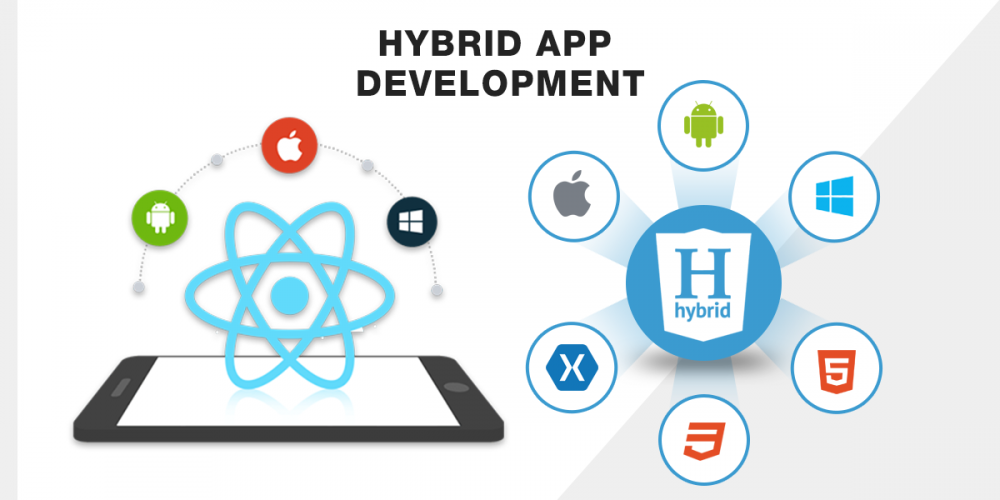
With the current hectic digital economy, companies are put on their toes to ensure that they can develop mobile applications fast with a limited development budget. It is no longer a secret that, regardless of whether it is a startup that tries some new ideas or an enterprise that is adding a new layer of digital functionality, cost efficiency and scalability of development strategies are needed more than ever.
Realizing the ways app development saves time and budget assists companies in making smarter digital decisions. Hybrid development allows creating a balanced route to innovation without overconsumption of resources by combining the flexibility of web technologies and the performance of native applications.
In addition to being fast and cost-effective, hybrid development also enables companies to keep up with a highly competitive environment. It facilitates short-term launches and long-term digital expansion by making it possible to run experiments faster, ensuring cross-platform consistency, and simplifying scaling. Firms are able to confirm ideas faster, change in line with changing user expectations, and the technical debt will be reduced over time. This renders hybrid development not only a cost-efficient strategy but also the strategy to develop mobile solutions to create future-proofed ones.
Why Businesses Are Choosing Hybrid Mobile Development?
So, to know the answer to these, there are some pointers that you can have a look at for a better understanding. So let’s get started.
Understanding Hybrid Mobile Application Development
Hybrid mobile apps are developed with technology such as HTML, CSS, and JavaScript, but operate within native applications. This enables them to work across numerous operating systems like iOS and Android, with one codebase.
Recent technologies such as Flutter and React Native have contributed to much better performance and responsiveness, closing the divide between hybrid and native applications. This has seen hybrid development transforming into an alternative that saves on cost to a development strategy.
The greatest benefit is efficiency: developers can write code once and deploy it across multiple platforms without wasting time or effort.
Faster Development with a Unified Codebase
Reduced development time is among the strongest points of hybrid development. Businesses do not have to develop separate applications to operate on operating systems, but develop one that runs everywhere.
This integrated development process reduces duplication and accelerates products. Platforms can be updated on feature changes, bugs, and UI growth at the same time, and release faster.
Companies that embrace hybrid mobile app development services tend to enjoy reduced time-to-market, and thus it is projectable to be able to prove ideas and stay afloat with competitors.
Reduced Development and Maintenance Costs
Another reason that contributes a lot to the adoption of hybrids is cost optimization. Separate native applications also demand more personnel, time, and testing.
Hybrid applications simplify these costs, with development and maintenance being handled as the same workflow. Updates are updated once, hence minimizing any long-term operational costs.
The standardized model is also easy to resource, and a business will be able to invest more in innovation instead of redundant development activities. The savings from the decline in maintenance work can, in the long run, enhance the general project profitability.
A trusted custom software development company partners with many business to have the hybrid architecture to be optimized to offer performance at the same time remain cost effective. This is a strategic partnership that would aid in maximizing ROI and reducing risks during development.
Faster Iteration and Continuous Updates
With the modern dynamic digital environment, the necessity to iterate fast has become a must. Hybrid development facilitates the agile methodology through the ability to test and release products within a short time.
This allows any change to be deployed on platforms immediately, since the change is done in a single codebase. This flexibility enables companies to test with features, perfect interfaces, and react more promptly to user feedback.
CI/CD pipelines can also be used to provide automation in deployments by teams, minimizing release times again. This makes sure that the improvements are delivered to the users promptly without affecting the functionality.
Such flexibility shows in a clear way how hybrid application making saves time and budget in rapidly changing markets, where flexibility is the key to success.
Consistent User Experience Across Platforms
One of the most important things in brand credibility is having a constant user experience across devices. Uniform design patterns, navigation flows, and feature behavior across operating systems are guaranteed by hybrid development.
Sharing a codebase enables easier standardization of the UI elements and keeps visual consistency. Furthermore, the new hybrid models provide the possibility to access native capabilities such as GPS, push notifications, and biometrics.
Firms utilizing a hybrid mobile app development portal will be able to provide an integrated experience and avoid having many development streams, and maintain brand consistency and satisfaction of the end user.
Simplified Testing and Deployment
Testing is often one of the most resource-intensive aspects of app development.The native applications need to be tested independently, and this is more time-consuming and expensive.
Hybrid applications are easy to test, as most of the features are common to the platforms. Although the validation needs to be done device-specifically, overall complexity is decreased.
The single development method also enhances the efficiency of the QA process, which enables the team to detect bugs at early stages of the development process. Quickened testing process results in a more stable release and user satisfaction.
More efficient deployment also takes place. Platforms can be updated at the same time, reducing delay and creating coordinated rollouts. Organizations that collaborate with a qualified Custom software development firm can also stream deployment pipelines to be used in the most appropriate manner.
Scalability for Future Growth
One of the most resource-consuming parts of app development is frequent testing. Scalability is also a paramount factor for businesses that intend to expand digitally in the long term. Hybrid applications are flexible applications with architectures that can be expanded in the future without necessarily having to be rewritten.
Hybrid frameworks offer a scalable base, whether incorporating new APIs, new functions or new markets. It is particularly useful in cases of startups that want to scale fast and in businesses that deal with complex ecosystems.
Modular development is also endorsed by hybrid architecture, whereby different teams can add new features without interfering with the features of the previous ones. This will facilitate ease in upgrades as well as reduce downtimes as the application is upgraded.
Also, the businesses will be able to match the scale of apps with the cloud infrastructure so that it can perform more efficiently when the traffic surges or the number of users increases. The hybrid development helps in sustainable development and effective use of resources by minimizing the redevelopment requirements.
Ideal Use Cases for Hybrid Applications
Hybrid application development is especially efficient in business-oriented applications, including tools used by enterprises, eCommerce solutions, content-driven applications, and customer engagement solutions.
Such applications are more focused on accessibility, scaling, and similar user experiences across devices. Though most business applications can be used with high graphics-intensive apps, hybrid development is exceptionally good.
Sectors such as healthcare, fintech, and logistics are moving towards adoptinga hybrid approach to internal and facing apps. A hybrid is suitable when there is a need to constantly improve the product; this is because updates can be implemented as fast as possible.
Knowledge of the project objectives and technical specifications assists in defining the time when hybrid development would provide the greatest value.
Strategic Decision-Making for Long-Term ROI
Choosing the right development approach is not just about short-term savings — it’s about long-term value. Hybrid development offers a balanced strategy that combines performance, efficiency, and scalability.
Factors such as the user expectations, integration requirements, and maintenance costs have to be considered by the organizations. The hybrid plan is an effective strategy that should be designed properly so that applications can be flexible with changing technologies.
Smart investments and future-proof development of digital products without needless complexity can be achieved when businesses realize the value of hybrid mobile application development.
Conclusion
Hybrid mobile development has become a strong tool in the quest of businesses to find speed, efficiency, and scalability. It makes it possible to develop at a quicker rate, save money, and ease the maintenance process, which is why it resolves some of the most urgent issues in mobile app development.
Hybrid development can present real benefits to organizations, small and large, creating a unified set of codebases and an identical user experience, efficient testing, and scalable architecture.
Due to the fact that mobile innovation will keep on increasing, hybrid solutions will still bea viable and strategic option. Those companies that adopt this strategy will be able to speed up digital transformation, at the same time retaining financial effectiveness and sustainability over the long term.