In many ways, the health industry relies on the technology industry. If care is to improve, technology must do so first. In fact, the past provides ample evidence of this with advancements such as telemedicine, electronic health records, MRI scans and so on. These areas of healthcare are taken for granted today, but there was once a time when none of these innovations existed. In this article though, we’re not concerned with the past; we’re looking to the future of healthcare. Here’s how emerging technology is transforming health and medicine.
Artificial Intelligence (AI) and Machine Learning
AI is all the rage at the moment, but you’d be forgiven for thinking this only applies to creative industries. In truth, AI is disrupting every industry and while many people are quick to paint AI in a bad light, there are many examples of AI advancing our lives.
Healthcare is perhaps the best example of this where AI is being used in things like diagnostics and drug discovery. AI goes hand in hand with machine learning, where computer-generated algorithms learn from previous data to enhance future data.
Personalised and Precision Medicine
The main benefit of AI and machine learning is that it leads to more personalised solutions, whether that’s marketing solutions or health solutions. Given the advancement of AI, we can expect to see the evolution of personalised medical solutions, slowly moving away from catch-all solutions. From determining which type of medicine is most suitable for a certain individual to determining how much ultrapure water should be added to a certain medicine dosage, there are tons of ways machine learning could lead to more precision.
In future, health professionals will be tasked with combining genetic information with AI-powered tools to provide bespoke medical solutions to patients. In doing so, we can expect to see more successful outcomes.
Telemedicine and Digital Health
It’s clear to see that the health industry has become increasingly digitalised in the last 20 to 30 years. But as digital solutions continue to evolve, we can expect this to kickstart the next era of healthcare. The future of health will likely see a shift from digital to virtual, in line with trends we’re seeing in other areas.
From virtual meetings to virtual gaming worlds, it seems the whole world is turning to virtual solutions. From a health standpoint, we’re already seeing virtual consultations and patient monitoring, and we can expect this to expand to other areas going forward.
This should work wonders for patient accessibility, helping to connect those in rural areas with the same standard of care as everyone else.
Robotics
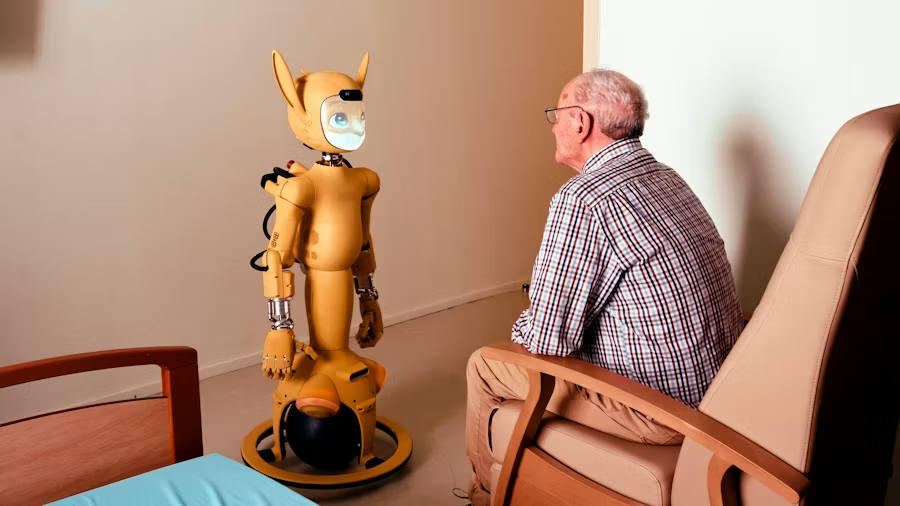
Robotics have drastically disrupted the manufacturing industry, but it’s fair to say we’re still a long way away from trusting robots to perform surgery on us. However, with the advancement of AI and its ability to offer such personalised, precise data, the potential to introduce robots to the surgery room grows.
While you might be picturing a transformer-like surgeon, it’s worth pointing out that robotic-assisted surgery is already being used by surgeons as a hybrid approach. This combines the trust and compassion of a human with the precision of a medical device to carry out intricate surgeries that leave minimal margin for error.
Final Thoughts
Technology and innovation are hard to predict. Who would’ve thought 10 years ago that we’d be trusting tools like ChatGPT with health advice? However, there is strong evidence to suggest that the innovations mentioned above will become increasingly visible in the healthcare world in the coming years. From machine learning to robotics, these types of tech have built up enough trust amongst society for humans to now place full faith in them and allow them to advance their personal health.