Thailand’s digital economy is booming, with 75% smartphone penetration. Southeast Asia is a hotspot for on-demand apps. Thai consumers are now among the most mobile-first in ASEAN, with smartphone penetration above 90% and an ingrained habit of ordering everything.
This includes ordering or booking rides, food, groceries, and beauty services from their phones. The infrastructure and demand are very much present. Hence, the main question here is: who launches next, and how fast?
Some of the popular on-demand apps in Thailand include Line Man, Helpr, Baania, Lalamov, Foodpanda, Bolt, not to mention the all-in-one super apps like Grab and Gojek. For entrepreneurs eyeing the on-demand market in Thailand, there is a window of opportunity; however, they need to capitalise on it fast to succeed.
Launch your Grab Clone in Thailand by learning the fastest way to do so.
“Speed of execution is the most underrated competitive advantage in emerging market startups.”
— Reid Hoffman, Co-founder, LinkedIn
Why Most Thai Start-ups Launch Late
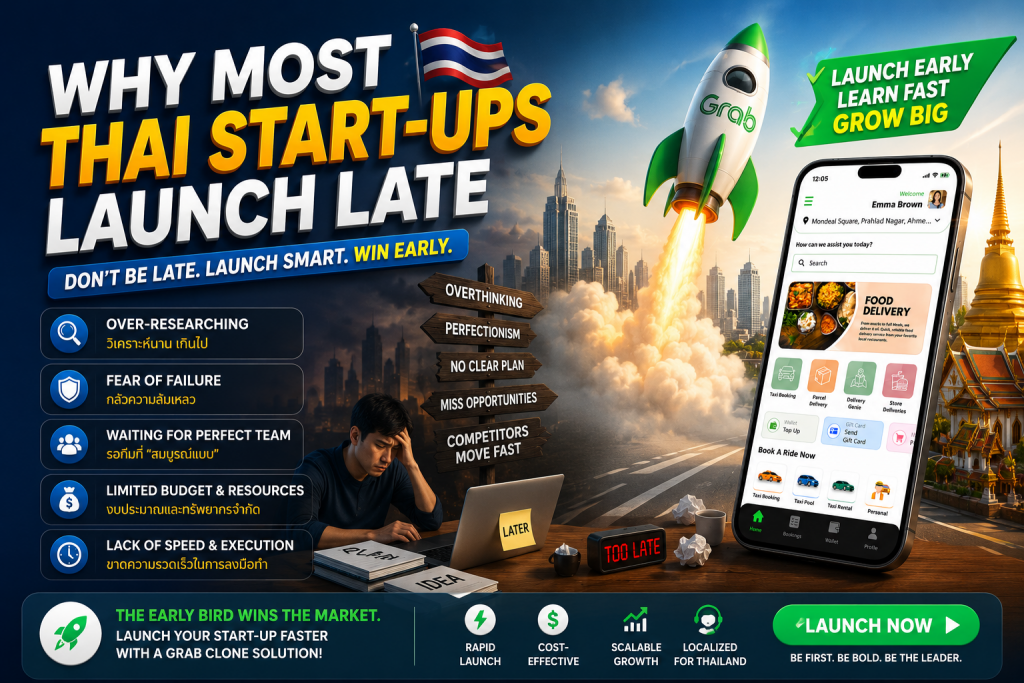
Most founders in Thailand underestimate the cost of delay. While they are negotiating with development agencies, the market is moving. Founders who opt to build custom on-demand solutions commonly face issues like
- Over-engineering the first version
- Ignoring local market nuances
- Delayed integration with payment and logistics providers
There are several notable examples of on-demand start-ups that did not have the desired outcome in Thailand. This includes firms like Foodpanda, Robinhood, and UberMoto. Although there are several reasons why they failed, one of them is delayed market entry due to lengthy development cycles.
Custom development timelines of 9–18 months eat through seed capital before a single user onboards. The founders who win aren’t building from zero. They’re building from a foundation.
Firms that opt to buy a Grab Clone in Thailand will be better placed to succeed than those who choose to custom-develop it.
How To Develop A Grab Clone App Fast?
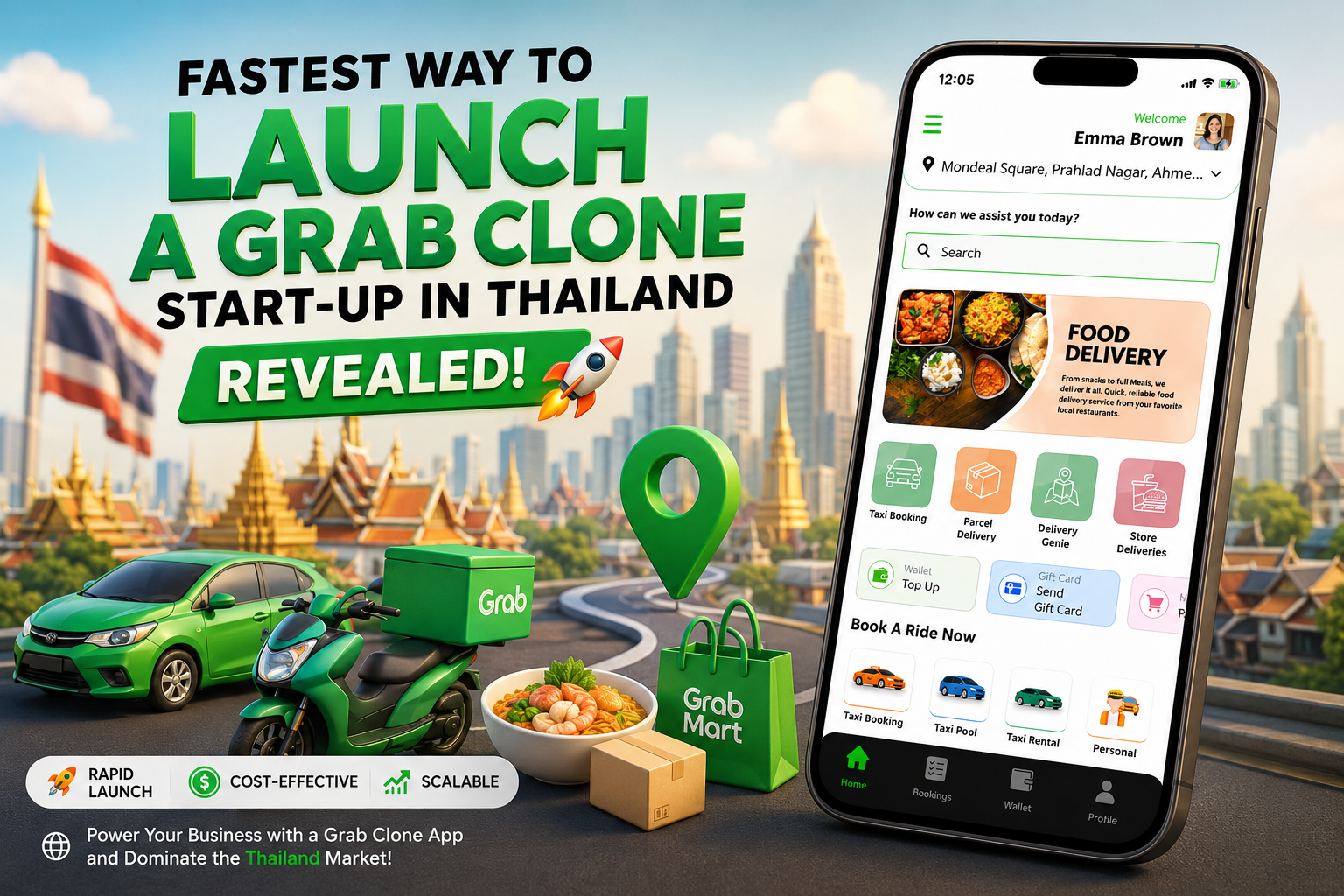
Businesses targeting rapid market entry need to avoid custom super app development at all costs. A white-label on-demand super app is a fully developed, market-ready software solution that software firms can personalise and have ready to launch in 1-2 weeks.
Hence, if you opt for a white-label Grab Clone app, you are choosing a pre-built solution that you can brand as your own. For a Grab Clone start-up, it means you can deploy an everything app that includes verticals like taxi, delivery, or marketplace app without writing a single line of code.
This is not a compromise; it is a strategic decision. A white-label app is like moving into a fully furnished apartment. Why build the furniture yourself if you can start living today?
Here is a table that further explains which is the fastest method to launch your Grab clone:
| Factor | White-Label Solution | Custom Development |
| Launch Timeline | 1–2 weeks | 9–18 months |
| Upfront Cost | Low–Medium (fixed) | High–Very High (variable) |
| Technical Risk | Low | High |
| Customisation | Moderate–High | Full |
| Market-Readiness | Immediate | Post-launch iteration |
| Ideal For | MVPs, lean start-ups, fast validation | Unique IP, proprietary logic |
Real-World Examples of On-Demand Start-up Launches in Thailand
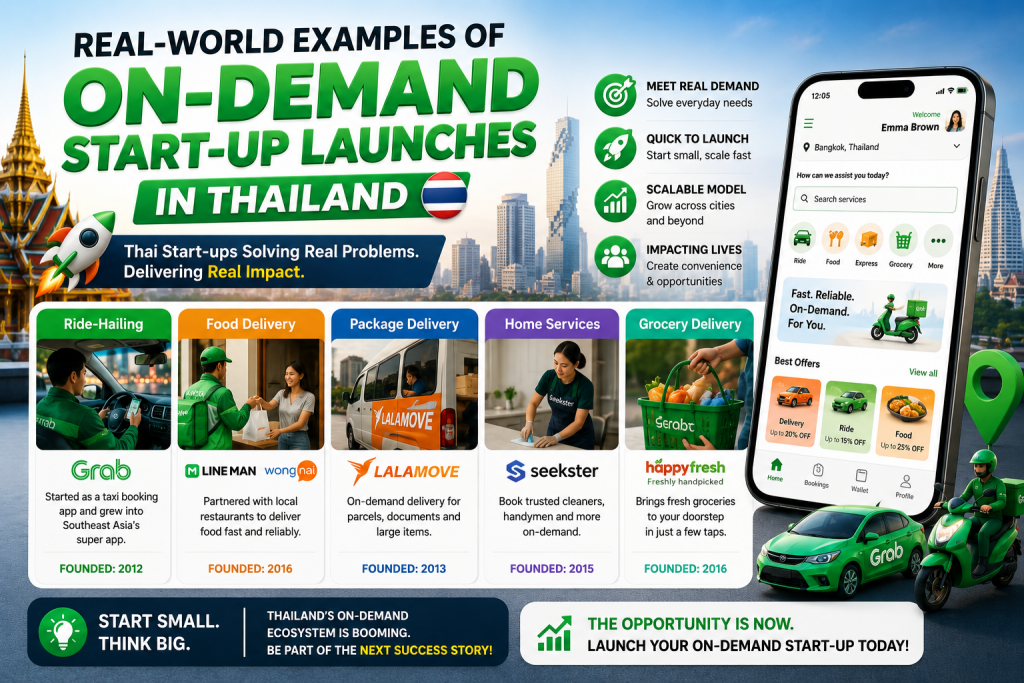
Several regional operators have used ready-made platforms to enter the Thai market without the burden of custom development:
These are some of the best examples:
- LINE MAN Wongnai: LINE MAN made the wise choice of not reinventing the wheel and based their super-app blueprint on well-established multi-service apps like Grab and Gojek. They succeeded in gaining a good market share by localizing and expanding beyond a single service.
- GET Thailand: This firm chose to develop a multi-service super app like Gojek and followed their model. This is a proven platform in Indonesia and is perfect for Thailand, too. It allowed them to scale quickly after a fast market entry.
The pattern is consistent: identify an underserved micro-segment, deploy fast, iterate in the market.
Services You Can Launch in Thailand with a Ready-Made App
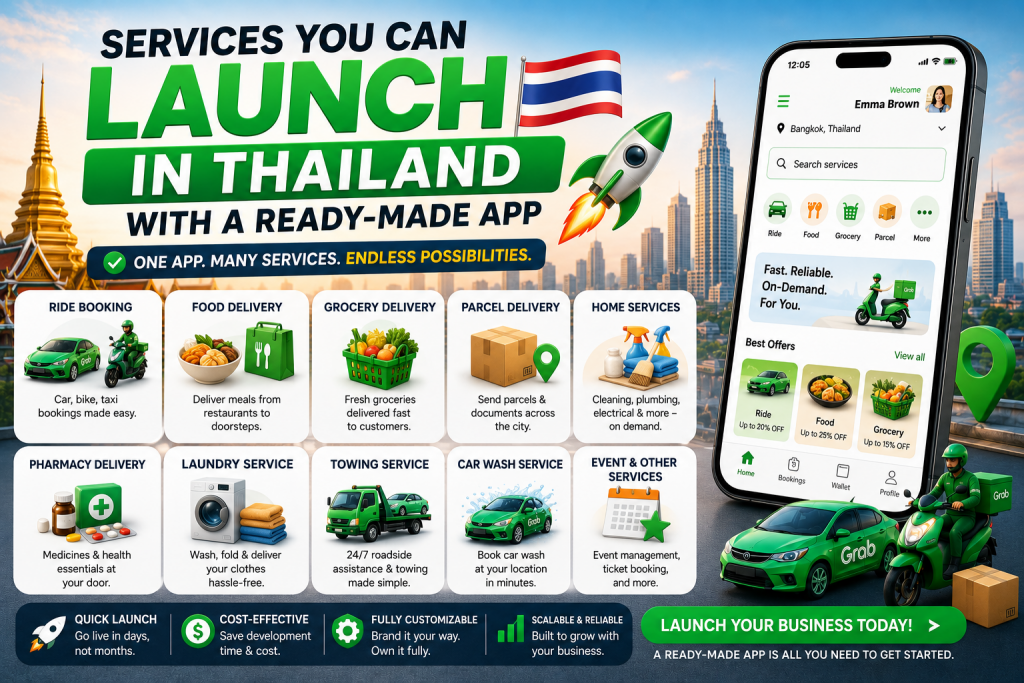
Businesses entering the Thailand market have a versatile market at their disposal and can choose from several verticals:
- Ride-Hailing & Micro-Mobility: On-demand motorbike taxis (Win Moto), standard sedans, and regional logistics couriers.
- Hyper-Local Delivery: Instantaneous fulfilment pipelines for street food, groceries, medical supplies, and retail parcels.
- On-Demand Home Services: Instantly matching consumers with certified local professionals for HVAC maintenance, cleaning, and beauty wellness.
Besides this, there are several other on-demand opportunities in Thailand, like healthcare, telemedicine, laundry, and much more. This makes Thailand the ideal country to launch a multi-service app like Grab.
Speed Is a Strategy
In Thailand’s on-demand market, it is expensive to be second. A competitor who launches six months ahead accumulates a supply-side advantage that takes years to overcome.
A white-label solution is best suited for this strategy. They reduce costs and restructure the competitive timeline in your favour.
The fastest way to launch an AI Grab Clone in Thailand is more about picking the right development strategy for your start-up.
For founders evaluating the best white-label platform to select, V3Cube is a globally recognised provider of on-demand app solutions. This includes the white-label Grab Clone development.
It is hard to overlook the fact that they have already delivered over 1900 solutions globally. When you order a Grab Clone script from V3Cube, you don’t get a simple multi-service with basic features. You gain access to an AI-powered, feature-rich solution that can be ready to launch in 1-2 weeks.
FAQ
1. What is the fastest way to launch an on-demand Grab Clone app startup in Thailand?
The fastest method to launch an Multi Service App in Thailand is to buy a white-label on-demand Grab Clone app. One can launch such an app within 2 weeks.
2. How much does it cost to launch a Grab Clone startup in Thailand?
The cost largely depends on the method of development. Custom Grab clone development can cost from $50,000 to $200,000 or more. While the cost of buying a white-label Grab clone will be a fraction of that amount.
3. Which on-demand services have the highest demand in Thailand?
Food delivery, ride-hailing, grocery delivery, and home services are very popular in Thailand.
4. Is a white-label app customizable for the Thai market?
Yes, a white-label Grab clone is customizable. The software development firm will provide some degree of customisation that includes regional and business-specific preferences prior to launch.