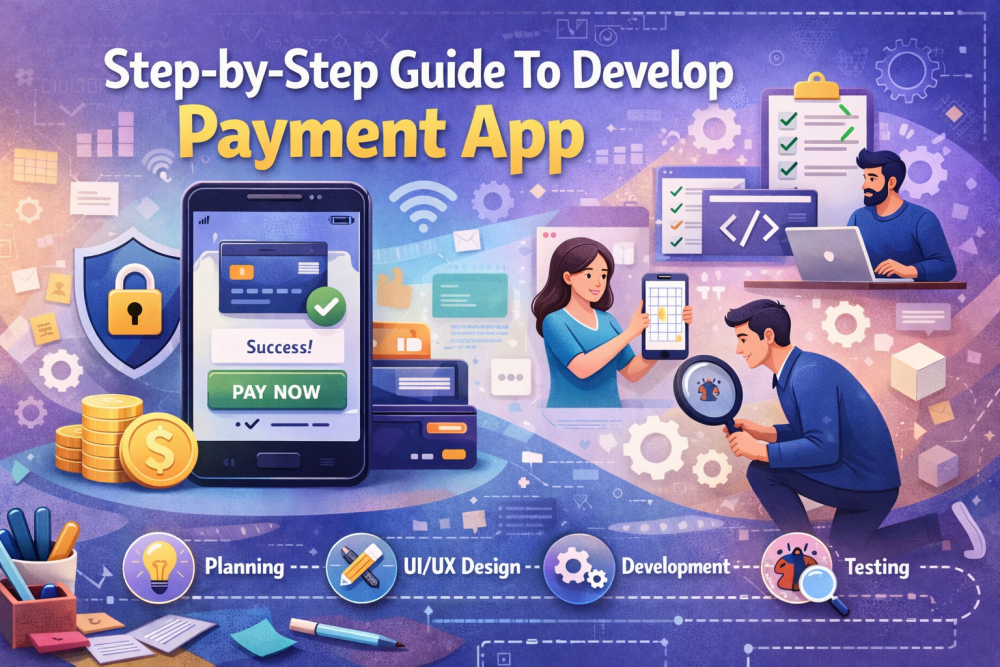
The global digital payments market has experienced exponential growth over the past decade. Consumers increasingly prefer cashless, contactless, and mobile-first solutions for everyday transactions. From splitting dinner bills to managing international transfers, payment apps are now central to the financial ecosystem. Companies like PayPal and Stripe have demonstrated how powerful and scalable digital payment platforms can become when built strategically.
If you’re planning to develop a payment app, success depends on more than just coding skills. You must understand regulations, prioritize security, design intuitive user experiences, and plan for scalability from the beginning. This comprehensive guide walks you through every critical step of building a secure and scalable payment application.
1. Conduct In-Depth Market Research
Every successful payment app begins with strong market validation. The fintech space is competitive, and entering it without research can lead to costly failures.
Identify Your Target Audience
Determine who your primary users will be:
- Individual consumers (P2P transfers)
- Small and medium-sized businesses
- Large enterprises
- Freelancers and gig workers
- International remittance users
Understanding user behavior helps define features, pricing, and onboarding flows.
Analyze Competitors
Study major players such as Venmo, Square, and PayPal. Analyze:
- Their transaction fee models
- App interface design
- Security standards
- User reviews and complaints
- Expansion strategies
Identify gaps in service quality, regional coverage, or pricing inefficiencies that your app can address.
Define Your Unique Value Proposition (UVP)
Ask:
- What problem am I solving better than competitors?
- Is my app faster, cheaper, or more specialized?
- Can I serve an underserved market segment?
Clear differentiation increases adoption and investor confidence.
2. Choose the Right Business Model
Your revenue model determines long-term sustainability. Payment apps typically earn through:
- Transaction fees
- Merchant service fees
- Subscription models
- Currency exchange margins
- Interchange fees
- Value-added services
For example, Stripe primarily earns via processing fees for merchants, while Venmo monetizes through instant transfer fees and business transactions.
Choose a model that aligns with your target users and competitive positioning.
3. Understand Regulatory and Legal Requirements
Financial applications operate within strict regulatory frameworks. Ignoring compliance can result in heavy fines or operational shutdowns.
Key Regulatory Considerations
- PCI DSS compliance for card data handling
- KYC (Know Your Customer) verification
- AML (Anti-Money Laundering) monitoring
- GDPR for European users
- Regional data protection laws
- Financial licenses (Money Transmitter License, EMI License)
Depending on your country, you may need:
- Partnership with a licensed bank
- Registration with financial authorities
- Ongoing compliance audits
Consult legal and compliance experts early to structure your app correctly.
4. Define Core Features
A well-defined feature set ensures focused development. Start with an MVP and expand gradually.
Essential Features
- User Registration and Authentication
- KYC Verification
- Bank/Card Linking
- Wallet Balance Display
- Fund Transfers (P2P and Merchant)
- Transaction History
- Push Notifications
- QR Code Payments
Advanced Features
- Recurring payments
- Split bills
- Bill payments
- Cross-border transfers
- Multi-currency wallet
- Investment integration
- Crypto support
- Buy Now, Pay Later (BNPL)
Avoid overloading the first release. Focus on stability and security first.
5. Select the Appropriate Technology Stack
Your technology choices affect scalability, performance, and maintenance.
Frontend Development
- iOS: Swift
- Android: Kotlin
- Cross-platform: Flutter or React Native
Backend Development
- Node.js
- Python (Django or Flask)
- Java (Spring Boot)
- Ruby on Rails
Database Solutions
- PostgreSQL
- MySQL
- MongoDB
Cloud Infrastructure
Cloud providers ensure high availability and scalability:
- Amazon Web Services
- Google Cloud
- Microsoft Azure
Cloud infrastructure supports auto-scaling, disaster recovery, and secure storage.
6. Design a Secure System Architecture
Security is the backbone of a payment app. Even minor vulnerabilities can damage reputation and user trust.
Security Best Practices
- End-to-end encryption
- Secure Socket Layer (SSL)
- Tokenization of payment data
- Two-factor authentication (2FA)
- Biometric login (Face ID/Fingerprint)
- Fraud detection algorithms
- Data encryption at rest and in transit
- Role-based access control
Implement real-time monitoring systems to detect suspicious transactions instantly.
Consider integrating AI-powered fraud detection tools that analyze user behavior patterns.
7. Integrate Payment Gateways and Banking APIs
Payment processing requires secure integration with financial institutions.
Integration Options
- Direct bank APIs
- Payment gateways
- Banking-as-a-Service (BaaS) platforms
Popular providers include:
- Stripe
- PayPal
- Plaid
These APIs help with:
- Bank account verification
- Card tokenization
- Real-time transaction processing
- Balance inquiries
- Compliance automation
Choose providers with strong documentation and global scalability.
8. UI/UX Design: Building Trust Through Simplicity
User experience determines whether users stay or uninstall.
Key UX Principles
- Minimalist design
- Clear call-to-action buttons
- Easy transaction flow
- Transparent fee disclosure
- Instant confirmations
- Intuitive navigation
Trust is built through clarity and consistency. Avoid overwhelming users with complex interfaces.
Prototyping tools such as Figma or Adobe XD can help refine the design before development.
9. Development Phases
Break development into structured milestones.
Phase 1: Backend Setup
- Database architecture
- API creation
- Security configuration
Phase 2: Frontend Implementation
- User onboarding screens
- Wallet dashboard
- Payment workflow
Phase 3: API and Gateway Integration
- Connect banking APIs
- Integrate fraud detection systems
- Enable push notifications
Phase 4: Security Layer
- Implement encryption
- Configure authentication layers
- Conduct internal audits
10. Testing and Quality Assurance
Types of Testing
Financial apps must undergo rigorous testing before launch.
- Unit testing
- Integration testing
- Performance testing
- Load testing
- Security testing
- Penetration testing
- User Acceptance Testing (UAT)
Hire third-party cybersecurity firms to conduct vulnerability assessments.
Testing ensures reliability under heavy transaction loads.
11. Deployment and Monitoring
After testing, deploy your app to:
- Apple App Store
- Google Play Store
Set up monitoring tools to track:
- Server uptime
- API latency
- Fraud alerts
- Error logs
- User behavior metrics
Implement CI/CD pipelines for regular updates without downtime.
12. Marketing and User Acquisition
Launching your app is only half the battle. You must acquire users effectively.
Marketing Strategies
- Influencer marketing
- Referral programs
- Cashback offers
- Social media campaigns
- Partnerships with merchants
Trust-building campaigns and strong customer support enhance retention.
13. Monetization Strategy
Revenue generation ensures sustainability.
Common monetization methods include:
- Transaction fees
- Merchant processing fees
- Currency exchange margins
- Subscription upgrades
- Premium features
- Lending services
Companies like PayPal generate significant revenue through processing fees and cross-border transactions.
Choose a pricing structure that remains competitive while profitable.
14. Post-Launch Maintenance and Scaling
A payment app requires continuous improvement.
Ongoing Responsibilities
- Regular security updates
- Compliance monitoring
- Performance optimization
- Feature expansion
- Fraud detection enhancements
Future Scaling Opportunities
- International expansion
- Cryptocurrency integration
- BNPL services
- Business banking services
- Open banking APIs
Adopting a microservices architecture enables smooth scaling.
Conclusion
Developing a payment app is a complex but rewarding process. It requires strategic planning, strong regulatory understanding, advanced security measures, and seamless user experience design. By following this step-by-step guide—from research and compliance to deployment and scaling—you can build a secure, scalable, and competitive payment application.
In the fintech industry, trust is your most valuable asset. Prioritize security, ensure compliance, and deliver exceptional user experience. When executed effectively, your payment app can evolve into a comprehensive financial ecosystem serving millions of users worldwide.