Food in Nepal isn’t flashy, and it doesn’t try to be. It’s practical, filling, and shaped by terrain more than trends. Meals are built for long walks, cold mornings, and high places where appetite comes and goes.
Many travelers treat Nepali food as something to “get through” between treks or road days. That’s a mistake. Eat the right things at the right time, and food becomes part of what makes the trip work—especially if you’re moving around on Nepal adventure travel packageswhere energy and digestion actually matter.
This guide isn’t about chasing restaurants. It’s about knowing what to order when you’re hungry, tired, or unsure what your stomach wants.
Dal Bhat
The meal you’ll eat more than once (and that’s a good thing)
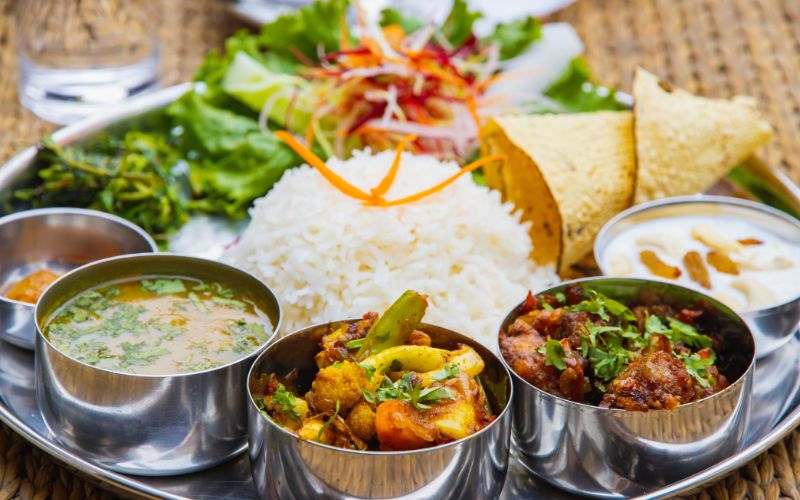
Dal bhat isn’t one dish. It’s a system.
Rice. Lentil soup. Seasonal vegetables. Sometimes pickles. Sometimes meat. It looks simple, but it’s designed to refuel you completely. That’s why trekkers swear by it.
Most people eat it once and think they’ve “done” Nepali food. That’s where they go wrong. Dal bhat changes slightly every day and every kitchen. One version might be light and comforting. Another surprisingly spicy.
Real-life moment: after a long uphill day, dal bhat is often the only thing that actually sounds good. And yes, refills are usually part of the deal.
Momos
Familiar, but not interchangeable
You’ve probably had momos elsewhere. Nepal’s are calmer and more balanced.
Steamed momos are the standard. Buff (water buffalo), chicken, or vegetable fillings. The dough is thicker than you might expect. That’s intentional—it holds up in cold conditions.
Most travelers make two mistakes here: ordering fried momos too early in the trip, or drowning them in chili sauce. Go easy at first. Altitude plus oil plus spice can hit harder than expected.
Thukpa
The cold-weather answer to everything
Thukpa is a noodle soup, common in mountain regions and trekking routes. Brothy. Warm. Flexible.
You’ll find vegetarian versions and meat-based ones. The best bowls aren’t fancy. They’re hot and consistent.
This is the dish people underestimate until they’re cold, tired, and suddenly grateful for something that warms from the inside out.
Sel Roti
Sweet, fried, and best when fresh
Sel roti is a ring-shaped rice bread, usually eaten for breakfast or festivals. Crisp outside. Soft inside.
It’s heavier than it looks. One is enough. Two is ambitious.
Most travelers try it once from a roadside stall and move on. Try it again if you see it being made fresh. Timing makes a difference.
Newari Food (If You Can Find It)
Newari cuisine, traditional to the Kathmandu Valley, is bolder and more complex than what most travelers expect from Nepal.
Dishes often include spiced meats, fermented elements, and textures unfamiliar to first-timers. Not everything will be your favorite. That’s fine.
This is where trips often go wrong—people order randomly and feel overwhelmed. Start with one dish. Share if you can.
You’re more likely to find good Newari food around Kathmandu, especially away from main tourist strips.
Gundruk
Sour, simple, and very local
Gundruk is fermented leafy greens, often served as soup or side dish. It’s tangy, earthy, and deeply Nepali.
It won’t win everyone over. But it’s worth trying at least once, especially in colder regions where it adds brightness to heavier meals.
Most people skip it because it doesn’t look exciting. That’s exactly why it’s interesting.
Tea, Not Coffee, Is the Default
Milk tea (often called chiya) is everywhere. Sweet. Spiced lightly. Comforting.
Coffee exists, especially in places like Pokhara, but tea is what locals actually drink throughout the day.
One small warning: tea refills come easily. Sugar adds up quickly if you’re not paying attention.
Eating on the Road and on the Trail
Menus shrink as you go higher. That’s normal.
On trekking routes, expect repetition. Dal bhat. Momos. Noodles. Eggs. That’s not a flaw—it’s logistics.
This is where Nepal adventure travel packages can help if they pace food stops well. Rushing meals or skipping them usually backfires later in the day.
Carry snacks, but don’t replace meals entirely. Warm food matters more than people expect.
Food Safety and Expectations
Nepal isn’t the place to experiment recklessly on day one.
Start with cooked food. Avoid raw vegetables early. Ease into spice.
Most stomach issues come from impatience, not hygiene.
Final Thoughts
The best food in Nepal isn’t about variety. It’s about reliability. Eating what fits the day, the altitude, and your energy level.
If you approach meals with the same respect you give routes and weather—especially while traveling on Nepal adventure travel packages—you’ll eat better and feel better.
Try things more than once. Eat slowly. And don’t underestimate how much a good bowl of something warm can shape your day.
FAQs
1. Is Nepali food very spicy?
Generally no. Spice is often added separately.
2. Can vegetarians eat well in Nepal?
Yes. Many traditional dishes are vegetarian.
3. Is street food safe?
In busy areas, usually yes. Start cautiously.
4. What should I eat on trekking days?
Dal bhat, soups, and simple cooked meals.
5. Are momos always safe?
Steamed ones are usually fine. Fried ones are heavier.
6. Will I get bored of the food?
Maybe—but repetition serves a purpose here.