Petrochemical plants routinely operate at high temperature, under pressure and using aggressive chemicals. Equipment has to hold up over long operating cycles without failing or degrading. The wrong material choice causes cracking, deformation, or a safety incident that shuts down production. That is why material selection in these facilities is taken seriously, and why engineers follow strict specifications when choosing alloys for core process units.
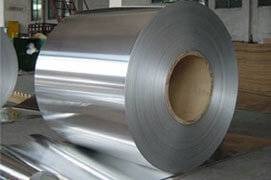
Petrochemical Grade Stainless Steel Sheets are a standard specification for core process units. It is a high-carbon version of standard 304, developed for elevated temperature service where regular grades start losing mechanical strength. If you are working with equipment that runs hot for extended periods, this is the grade that comes up repeatedly in project specifications.
What Are 304H Stainless Steel Sheets?
304H is an austenitic stainless steel. The key difference from standard 304 or 304L is the carbon content, which is between 0.04% and 0.10%. Standard grades keep carbon low to avoid carbide precipitation during welding. 304H keeps it higher on purpose, and that single difference changes how the material performs at elevated temperatures.
That higher carbon improves creep strength above 500 degrees Celsius. The material holds its shape under continuous thermal stress rather than slowly deforming over time. For plant operators running long production cycles, that matters a great deal. Suppliers stock 304H Stainless Steel Sheets in standard sheets, plates, and cut-to-size formats to meet various fabrication requirements across different plant configurations.
Chemical Composition and Properties
The base mix is chromium and nickel. Chromium takes care of oxidation resistance at high service temperatures. Nickel stabilizes the austenitic microstructure at heat. The addition of carbon is what provides the mechanical edge when temperatures rise and stay elevated for long periods of time.
Beyond thermal performance, it works well in a fabrication environment. It is cut, formed and welded using standard workshop equipment without the need for specialist processes. That is a practical advantage when building or repairing equipment under time pressure. Teams do not need to change their standard procedures to work with this material.
Key Properties of SS 304H Sheets
- Superior creep resistance: The higher carbon prevents the metal from slowly stretching under a continuing load at high temperature. This is critical for equipment that runs continuously over long service periods.
- High tensile strength: It maintains its mechanical performance not only at ambient conditions. Strength does not decrease with increasing temperature of the system.
- Excellent oxidation resistance: No scaling or degradation of surface under continuous heat exposure, keeping the equipment interior clean.
- Good ductility and toughness: Tough even with higher carbon content. Does not become brittle when in use.
- Reliable thermal stability: Even after long-term heat exposure, the microstructure remains stable, which means that the properties of the material won’t quickly deteriorate.
Why Petrochemical Industries Prefer 304H Stainless Steel Sheets
Long operational cycles under sustained high heat are standard in petrochemical processing. Standard 304 softens and deforms under those conditions over time. 304H does not, which is the practical reason it gets specified for heat-intensive process units instead of the regular grade.
It also resists oxidation and scaling on internal surfaces. In chemical processing, surface degradation inside a vessel is not just a maintenance issue. It can introduce contaminants into the process stream, which affects product quality and may require a full shutdown to address. Using a material that holds up internally reduces that risk considerably.
Since it does not lose shape under thermal load, it is well-suited for pressure-containing equipment. That includes vessels and reactors where structural reliability is directly tied to plant safety. Fewer failures mean fewer unplanned shutdowns, and that has a direct impact on operating costs over the life of the equipment.
Common Petrochemical Applications
- Heat exchangers: Handles heat transfer between process fluids under high thermal loads.
- Reformer and furnace components: Used for internal parts that face direct heat from burners during continuous operation.
- Pressure vessels: Form the containment walls holding process chemicals at high pressure and temperature.
- Reactor linings: Provide an inner barrier against heat and corrosive process fluids inside the main reactors.
- Distillation columns: Used for internal trays and shells where chemical separation takes place.
- Ducting and stack systems: Routes hot exhaust gases safely away from production units without structural failure over time.
Advantages of Using 304H Stainless Steel Sheets
- Longer life: Parts have longer life in high temperature zones before replacement. This is mainly because of its creep resistance.
- Standard fabrication and welding: No special welding procedure is required. Compatible with traditional techniques used in the majority of fabrication shops.
- Economical for high temperature service: The thermal performance demands are met without the use of expensive high nickel alloys, ensuring reasonable material costs.
- Widely available: Stocked globally as a standard grade. Sourcing replacement sheets during maintenance or repairs is not complicated.
- Consistent and verifiable quality: Manufactured to ASTM standards, providing predictable material properties with available documentation to verify this.
Standards and Specifications
The primary specification for these flat products is ASTM A240, chromium-nickel stainless steel plate, sheet and strip for pressure vessel use. For pressure system applications, the equivalent code specification is ASME SA240. Under the Unified Numbering System, this grade is designated UNS S30409.
Any reliable supplier will provide mill test certificates alongside the material. These confirm the exact chemical composition and allow the buyer to check the carbon content and other properties before the sheets are put in place.
Testing and Quality Assurance
The sheets go through several checks before installation. Analysis of chemical composition confirms that the carbon is within the 0.04% to 0.10% range. Tensile and hardness testing to confirm mechanical performance under load. Surface and dimensional inspection Checks for thickness variation or any rolling defects from the manufacturing process.
PMI testing is done in the warehouse or on your site. It confirms that the grade received matches what the documentation states, which is a standard requirement on most petrochemical project sites.
Selection Factors
Several factors determine whether 304H is the right choice for a given application. It starts with the operating temperature. Below 500 °C, a standard grade may perform adequately. The corrosive media involved need consideration too, since higher carbon content can affect performance in certain acid environments. The sheet thickness is determined by the internal pressure and mechanical load requirements. Everything also has to be in compliance with the applicable plant safety codes and petrochemical project specifications.
Conclusion
Stainless Steel 304H Sheets are a practical, well-proven material choice for petrochemical plant service. They can withstand high temperatures and resist oxidation, while offering predictable mechanical performance over long service periods, making them ideal for the harsh conditions in refineries and processing facilities. Any project that uses this material should use a supplier that provides you with full ASTM compliant mill documentation with the sheets.