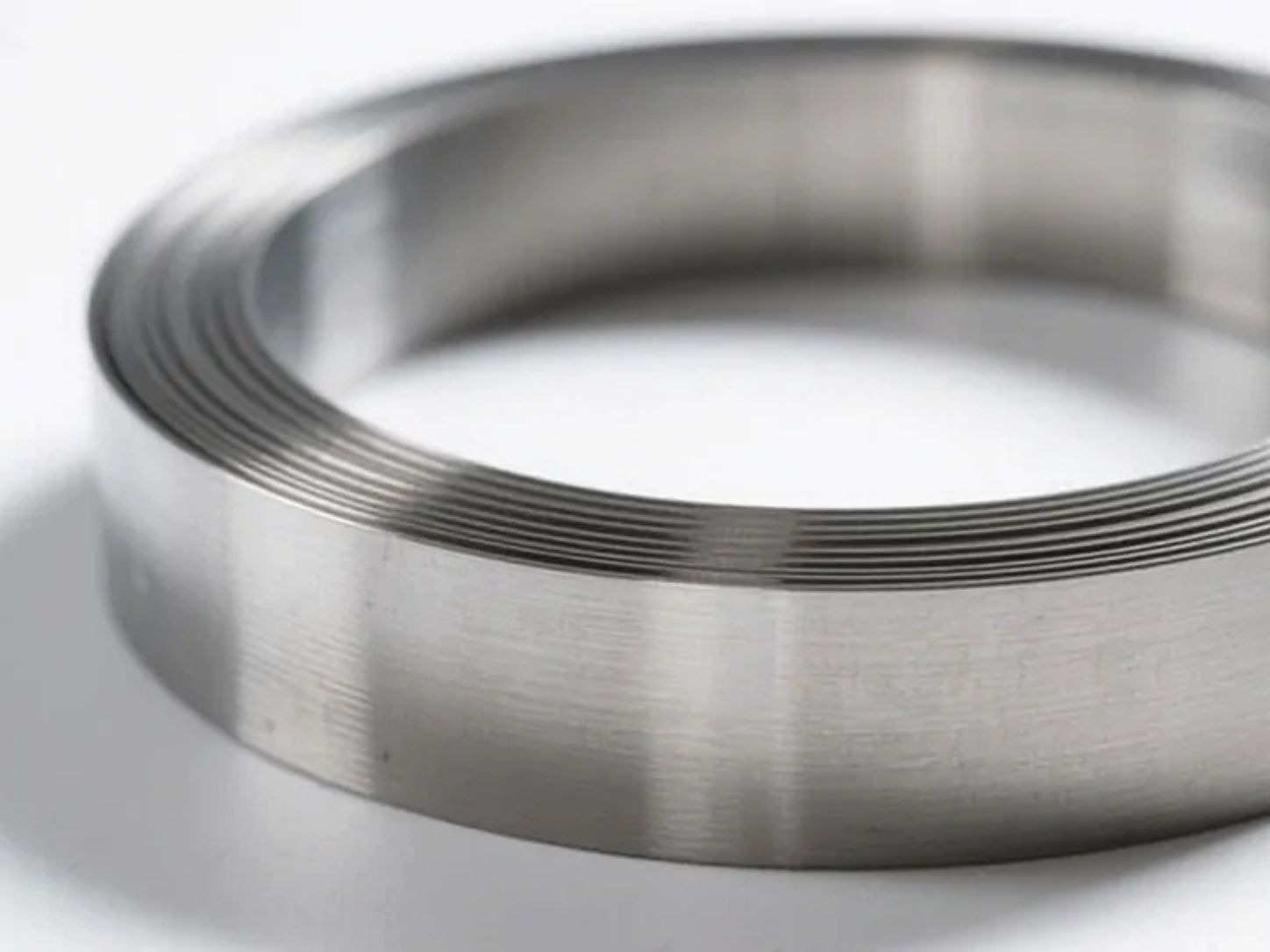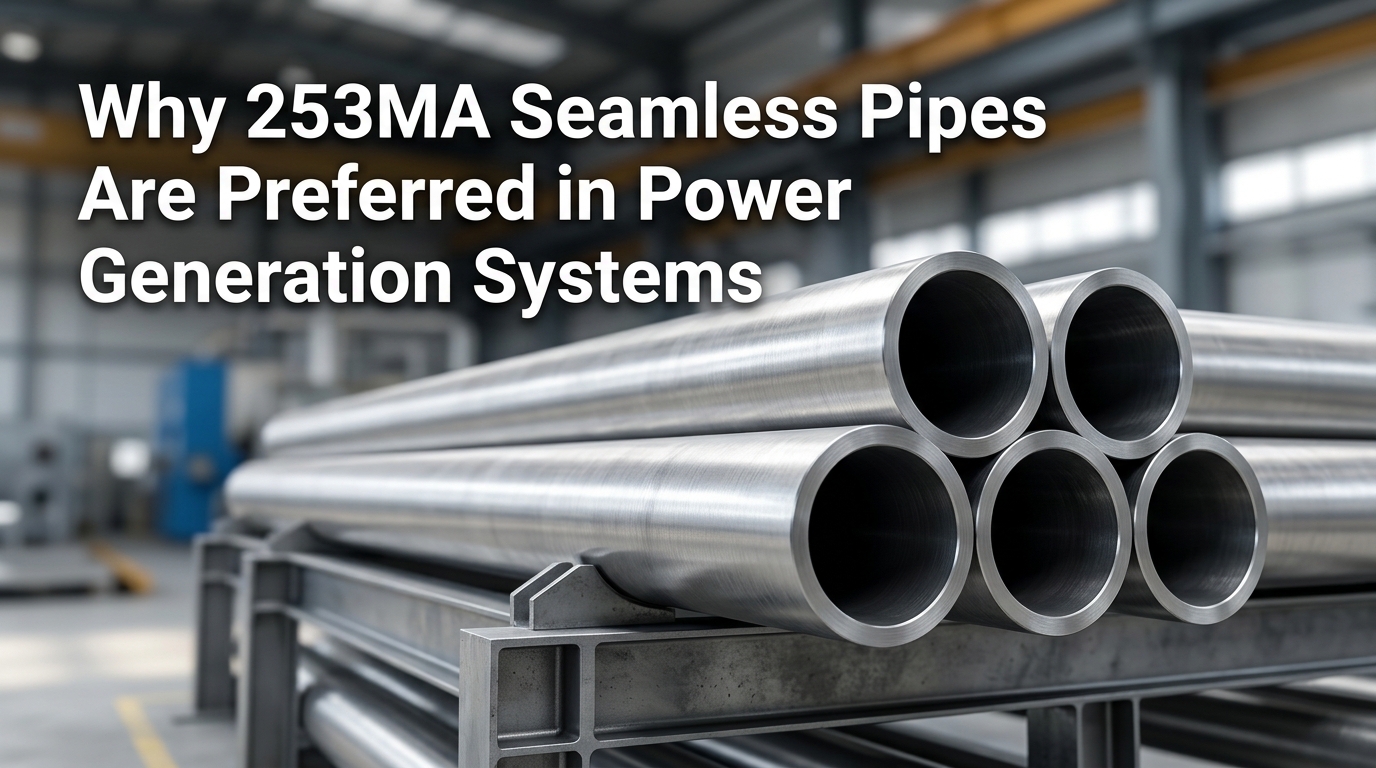
Stainless steel 253MA, designated under UNS S30815, is an austenitic heat resistant alloy engineered for service at elevated temperatures for long periods of time. It adds chromium, silicon, nitrogen and rare earth elements to provide performance far beyond conventional austenitics. The seamless construction eliminates the weld seam, a structural weak point that becomes problematic under high pressure and cyclic heat. For these reasons, 253MA seamless pipes have become a material specification of choice in power generation facilities around the world.
High Temperature Strength for Power Plant Operations
Power generation equipment is regularly operating at temperatures between 900°C and 1100°C. At these levels of stress, standard stainless grades will soften, deform or fail under continued mechanical loading. 253MA seamless pipes maintain structural integrity over this range, allowing them to be directly applicable to boilers, superheaters and heat exchangers where failure of the pipe has serious safety and financial consequences.
Nitrogen increases the high-temperature strength of austenite and the silicon-rich oxide surface layer prevents surface degradation. Sourcing from a qualified stainless steel 253MA seamless pipe manufacturer ensures compositional and dimensional consistency that high-temperature piping demands. Thermal stability in these uses is not accidental. It is the direct result of precise alloy design and UNS S30815 delivers it reliably, in continuous operating cycles.
Excellent Oxidation and Corrosion Resistance
Oxidation is one of the most persistent degradation mechanisms in power plant piping. Repeated thermal cycling causes conventional alloys to form loose, flaking scale, accelerating wall thinning and cutting service life short. UNS S30815 counters this through a dense, adherent chromium-silicon oxide layer that remains stable beyond 1000°C.
Flue gas streams in coal-fired, thermal, and waste-to-energy plants carry aggressive oxidising compounds. Cerium additions in 253MA seamless pipes improve oxide layer adhesion significantly, reducing scaling and holding surface integrity over longer service intervals. For plant operators managing tight availability targets, fewer unplanned shutdowns have direct operational value.
Superior Creep Resistance Under Continuous Thermal Stress
Creep, the slow plastic deformation of metal under sustained stress at high temperatures, is a primary failure mode in steam systems and pressure piping. 253MA pipe applications in steam headers and boiler outlet lines depend directly on the alloy’s resistance to this phenomenon over years of continuous operation.
Nitrogen-strengthened austenite and rare earth grain boundary stabilisation give 253MA seamless pipes a creep rupture strength that outperforms conventional 310S and 309S grades at equivalent temperatures. Service life extends considerably. Pipe replacement frequency drops, failure risk decreases, and plant safety improves as a direct result. Steam systems at 600°C and above benefit most from this property.
Why Seamless Pipes Are Preferred Over Welded Pipes in Power Systems
A welded pipe carries a structural discontinuity at its seam. Under cyclical thermal loading, that seam becomes a preferential site for stress concentration, fatigue cracking, and eventual leakage. In power generation piping, that risk is unacceptable.
Seamless pipes have a continuous, homogeneous wall with no fusion joint. Strength is uniform across the entire cross-section, and pressure handling capability is considerably higher. The pipe responds predictably to thermal expansion and contraction, which matters in systems that cycle daily. A stainless steel seamless pipe stockist supplier providing dimensionally traceable material gives engineers a reliable design baseline from procurement through commissioning. Where weld zone degradation accelerates failure under oxidising conditions, seamless construction holds integrity across the full service cycle.
Role of Silicon, Nitrogen, and Rare Earth Elements in 253MA
The performance of UNS S30815 reflects deliberate alloy engineering. Silicon, present at approximately 1.4 to 2.0 percent, promotes a stable protective oxide scale at the pipe surface. It also reduces the rate of internal oxidation under sustained thermal exposure, which is a separate and equally damaging mechanism.
Nitrogen strengthens the austenitic microstructure without sacrificing ductility. In pressure applications, deformation resistance must coexist with toughness. Nitrogen delivers both. Rare earth elements, primarily cerium, act at grain boundaries to inhibit creep and improve oxide adhesion mechanically. Each addition targets a specific failure mechanism, and 253MA seamless pipes perform as a purpose-built solution for thermal environments that exhaust standard grades far sooner.
Common 253MA Pipe Applications in Power Generation
253MA pipe applications span a wide range of high-temperature service environments within power generation. The alloy addresses operating conditions that standard austenitic grades cannot reliably sustain over long service periods.
Boilers
253MA seamless pipes are used in boiler tube assemblies and headers where metal temperatures routinely exceed 900°C and steam pressures demand reliable wall integrity over extended operating periods.
Heat Exchangers
The alloy performs well in shell-and-tube heat exchangers within flue gas recirculation circuits, where oxidising conditions and elevated temperatures occur simultaneously across long continuous runs.
Furnace Systems
In furnace radiant tubes and support piping, UNS S30815 withstands direct flame exposure and cyclic heating, preventing the scale formation that shortens component life in conventional alloys.
Steam Pipelines
High-pressure steam pipelines, particularly in superheater outlet circuits, rely on 253MA pipe applications to maintain dimensional stability and leak-free performance at temperatures well above standard austenitic capability.
Flue Gas Handling
Flue gas ducts and transition piping in coal and biomass power plants carry hot, corrosive gas streams. The dense oxide layer on 253MA seamless pipes limits wall thinning and keeps maintenance intervals manageable.
Waste Heat Recovery Systems
In waste heat recovery units, pipes cycle repeatedly between high and low temperatures. The creep and oxidation resistance of UNS S30815 prevents the progressive deformation that compromises less capable alloys across these cycles.
Advantages of 253MA Seamless Pipes in Industrial Operations
253MA seamless pipes deliver measurable operational benefits for plant engineers, procurement teams, and EPC contractors specifying materials for long-cycle industrial projects.
Longer Operational Life
Creep resistance and oxidation control extend service life well beyond standard heat-resistant grades. Total lifecycle replacement costs across power plant piping systems drop accordingly.
Reduced Downtime
The alloy’s thermal stability directly reduces unplanned shutdowns. Plants sourcing from a reliable stainless steel seamless pipe stockist supplier keep inventory manageable and maintenance schedules intact.
Lower Maintenance Costs
The adherent oxide layer formed by UNS S30815 reduces scale-related cleaning and inspection frequency. In boiler and heat exchanger systems running continuously at high temperatures, that reduction has a tangible cost impact.
Resistance to Thermal Cycling
Lower-grade alloys degrade progressively under repeated heating and cooling cycles. 253MA pipe applications hold dimensional accuracy and seal integrity under the same conditions without equivalent deterioration.
Better Efficiency in High Temperature Systems
Scale-free, structurally sound pipe walls maintain heat transfer efficiency over time. Plants using 253MA seamless pipes see consistent thermal output rather than the gradual performance losses that accompany degraded piping.
Importance of Choosing a Reliable Stainless Steel 253MA Seamless Pipe Manufacturer
Material quality in high-temperature piping is only as reliable as the supply chain behind it. A qualified stainless steel 253MA seamless pipe manufacturer provides full mill test reports, certified chemical composition records, and dimensional inspection data confirming ASTM and ASME compliance before material reaches the site.
Inventory availability carries equal weight. For EPC contractors on tight construction timelines, a stainless steel seamless pipe stockist supplier holding buffer stock in standard sizes cuts procurement lead times considerably. Export-quality packing, heat number traceability, and documentation aligned to international project requirements are baseline expectations from any serious industrial supplier.
Quality Testing and Standards for 253MA Seamless Pipes
Reliable 253MA seamless pipes reach site only after passing a defined sequence of quality checks. Each test addresses a specific failure risk.
- Positive Material Identification confirms the chemical composition matches the specified UNS S30815 grade, preventing costly mix-ups during fabrication or field installation.
- Hydrostatic testing applies internal water pressure above operating conditions, verifying the pipe wall holds without leakage or permanent deformation.
- Mechanical testing covers tensile strength, yield strength, and elongation against minimum thresholds in the applicable ASTM or ASME standard.
- Dimensional inspection checks outer diameter, wall thickness, straightness, and end squareness for accurate installation fit-up.
- Suppliers must provide batch-level documentation confirming full alignment with ASTM A312 and relevant ASME standards.
Conclusion
253MA seamless pipes address the specific demands of power generation systems with a precision that general-purpose alloys cannot replicate. High-temperature strength, oxidation resistance, and long-term creep performance make this alloy a dependable choice for boiler, steam, and heat recovery piping. For procurement teams and plant engineers ready to specify material, partnering with a proven 253MA seamless pipes supplier is the logical next step.